銅ニッケル管 C71500

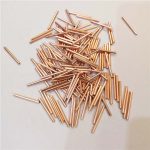
銅-ニッケル (キュプロニッケルとも呼ばれます) 合金は、海水に対する優れた耐食性と優れた加工性を提供します. 銅にニッケルを添加すると、強度と耐食性が向上し、合金の延性が維持されます, 強度を高めるために、銅ニッケルに他の元素を添加することができます, 耐食性, 硬化, 溶接性と鋳造性. ニッケル銅合金は、海洋用途に広く使用されています. C71500銅合金, よく知られています 70/30 銅ニッケル, との合金です 70% copper と 30% ニッケル含有量(C71640と同様に), それはアルミニウムとより高度に合金化されているC70600のそれより高いニッケル含有量を持っています, クロム, または錫は、海水環境に対するより大きな耐性で使用される, 砂の摩耗, 摩耗とかじり, また、より高い機械的特性, が必要です.
Tubesolutionsが提供する銅合金製品は、最高品質の原材料から製造され、ASTMやASMEなどの工業仕様またはその他の関連規格に完全に準拠しています. Wiho金属は主に合金銅C71500の大量の在庫を供給し、在庫しています (C7150T/CW354H) コンデンサーに使用されるASTM B466に準拠したシームレスチューブ, 熱交換器, パワーステアリングチューブ, ブレーキラインアプリケーション.
- 形容
- 照会
形容
銅ニッケル管, 30% - C71500 – は, 原則として, 銅合金の中でも最高の耐性を持ち、ほとんどの酸や水による腐食に対するインピンジメント攻撃. これは、他の銅合金よりも長い耐用年数が望まれる厳しい腐食性条件で使用されています.
C71,500は、海洋気候条件での使用に適した耐食合金です. それはしばしば使用のためにパイプにされます. しかし, ニッケル含有量が最大であるため 30%, 凝固温度範囲は、 66 °C, そして室温での熱伝導率はただです 1/13 純銅のそれの, 収縮キャビティなどの鋳造欠陥, 孔隙率, 樹状突起の分離, そしてホットクラッキングが大幅に増加します.
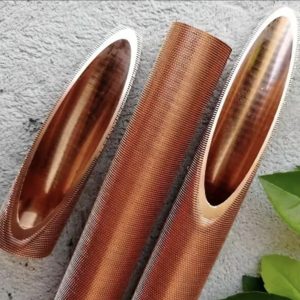
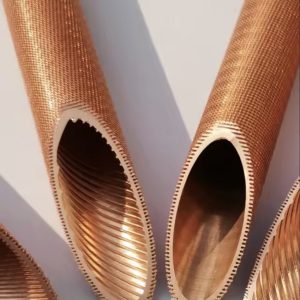
C71500白銅管熱交換器チューブ
C71500白銅は、C70600と同じ特性と用途を持っています, 冷間・熱間加工性良好. 適用範囲: コンデンサーおよび熱交換器用の銅ニッケル合金チューブ, 水蒸発器, ボイラーブローダウン熱交換器, エアクーラー, グランドスチームコンデンサー, 蒸気エジェクター, タービンオイルクーラー, 燃料ヒーター, 圧縮空気インタークーラーとアフタークーラー, フェルール, 油井ポンプライナー, 蒸留, 等.
●化学組成: 銅+合金元素Cu: ≥ 99.5, 銅+銀Cu + Ag: ≤ 65.5, リードPb: ≤ 0.05 (1), 鉄鉄: 0.40~1.0, 亜鉛Zn: ≤ 1.0 (1), ニッケルNi: 29.0~33.0, マンガンMnの: ≤ 1.0

C71500白い銅管
現在のパイプ製造プロセスで, 合金ビレットは半連続的に鋳造されます. この調製方法には大きな注ぎ込み液滴があります, また、溶融金属はガスや介在物に巻き込まれやすいです, インゴットの認定率が低い;
インゴットはまた、 25 熱間押出成形などの複雑なパイプ製造プロセス, 切断, 傷の皮膚, 繰り返し描画, 酸 洗, 等, その結果、大きな金属損失が発生します; これらの要因により、パイプ製造の全体的な歩留まりはわずか25%~33%になります (海外で約50%~53%), 材料とエネルギーを大幅に浪費します. したがって, 歩留まりとプロセス構造を改善する方法,
C71500銅ニッケル, 別名 70/30 銅ニッケル合金, BFe30-1-1, CuNi30Mn1Fe, 優れた耐食性を備えています, 特に海洋塩水環境において. 海水サービスで使用される主な鍛造銅ニッケル合金には、次のものが含まれます 30% ニッケル.
アプリケーション
ザ 70-30 銅ニッケル合金は塩水を使用し、熱淡水化をカバーしています, オフショア石油・ガス, 海上輸送, 発電・商用. 銅ニッケル合金は、海水冷却および消火システムにも使用されます, 油圧チューブ, 熱交換器, エバポレーター チューブとコンデンサー, ブレーキチューブを含む, プラットフォームライザーと抗菌タッチ面.
| UNS番号. | C71500 – BSI番号. CN107 – ISO 名 CuNi30Mn1Fe |
| ケミカルコンプ. (%) | Cu rem / ニ 29 ~ 33 / Pbの 0.05 / 鉄 0.40 ~ 1 / 亜鉛 1 マックス |
| ASTMスペック. | B 111, B 359, B395 さん, B 466, B 467, B 543, B 552 |
| ASMEスペック. | SBの 111, SBの 395, SBの 466 |
| アプリケーション | コンデンサー, エバポレーターと熱交換器のチューブ; 蒸留器チューブ; 塩水配管. |
| 癇癪 | O61アニール / HR50ドロー & ストレス解消 |
| プロパティ * | メトリック | 英語 |
| 密度 | 8.94 G/CCの | 0.323 ポンド/インチ³ |
| 引張強度最小- O61 -/- HR50の | 360 MPa -/- 495 MPa | 52 KSIの -/- 72 KSIの |
| 降伏強度- O61 -/- HR50の | 125 MPa -/- 345 MPa | 18 KSIの -/- 50 KSIの |
| CTEの, リニア | 16.2 10-6/°C@ 20.0 – 300 °C | 9.0 10-6/°F@ 70.0 – 570 °F |
| 比熱容量 | 0.09 cal/g-°C @ 20ºC | 0.09 BTU/lb-°F @ 70ºF |
| 熱伝導率 | 29 W/m-K@ 20.0 °C | 17 BTU/ft2/ft/h/°F@ 70.0 °F |
| 融点 | 1171 – 1238 °C | 2140 – 2260 °F |
ご不明な点がございましたら,あなたは連絡することを歓迎します sales@tubesolutions.com.cn
材料 | ティッカー :銅 (C10200、C11000、C10100、C10200、C12000,) 黄銅(C21000、C22000、C23000、C24000、C26000、C27000、C27200、C27400、C2800、C31400, C33000、C35600、C37100、C36000, C35300、C37100、C37700、C37710、C37000、C68700、C41100, C44300、C46200。C46400、C26130、C65600,) 青銅(C50500、C51100、C52100、C60800、C61000、C61900、C63010, C62300、C63000、C63280, C63020、C17200、C17000、C17500、C17510、C18200、C18100、C18200、C16200、C19400、C14500) キュプロニッケル(C70400、C71000、C71300、C71500、C70400、C70600、C75200、C77000、C75400,) | |||
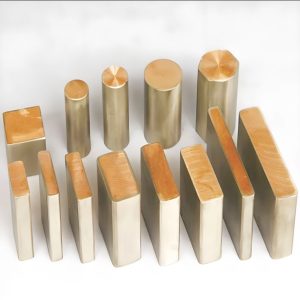
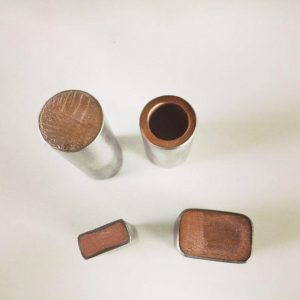
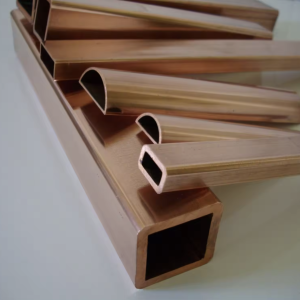
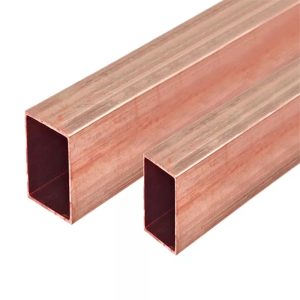
パイプ形状 | 丸い, 正方形, 直角の | |||
パイプ仕様 | 丸い | 肉厚:0.20んん-20mm | ||
外径:2.00んん-400mm | ||||
正方形 | 肉厚:0.2んん-20mm | |||
外径:5mmX5mm-400mmX400mm | ||||
直角の | 肉厚:0.2んん-20mm | |||
外径:5mmX6mm-380mmX400mm | ||||
パイプの長さ | 1/16 つらい,1/8 つらい,3/8 つらい,1/4 つらい,1/2つらい,フルハード,柔らかい,等 | |||
表面処理 | 工場,彧,明るい,油,ヘアライン,ブラシ,鏡,サンドブラスト,または必要に応じて. | |||
アプリケーション | 銅管は純粋な電気分解銅でできています. それらはサイズが正確で滑らかです 表面上. 他に,それらは良好な熱伝導性です. こうして, それらは熱に広く使用されています 交換器, ラジエーター, クーラー, 電熱昇熱パイプ, エアコンと冷蔵庫. 直管は石油輸送に使用できます, ブレーキパイプ, 水道管とガス管 工事現場用. | |||
パッケージ | 標準パッケージのエクスポート: 木箱を束ねるか、必要; 梱包は輸出の基準に達します. またはお客様のご要望に応じて. さらに, 表面保護の良い製品を作ります. | |||

White copper tube is a metal pipe made of copper nickel alloy as the substrate, named after its silver white metallic luster on the surface. This type of pipe perfectly combines the excellent processing performance of copper with the corrosion resistance of nickel, playing an irreplaceable role in fields such as marine engineering, chemical engineering, and energy, and can be regarded as the “pioneer of corrosion resistance” in industrial materials.
1、 Material composition and classification
(1) Core alloy composition
The basic components of white copper tube are copper (銅) and nickel (ニ), which can be divided into various types according to the different nickel contents:
B10 white copper tube: containing about 10% nickel and about 90% 銅, it is one of the most common white copper tubes with balanced comprehensive performance.
B30 white copper tube: containing about 30% nickel and about 70% 銅, with stronger corrosion resistance, especially suitable for extreme corrosive environments.
Other models, such as B20 and BFe10-1-1 (with a small amount of iron), optimize their performance by adding elements such as iron, マンガン, and zinc.
(2) Classification method
Classified by purpose:
White copper tube for condensation: used in equipment such as heat exchangers and condensers, utilizing its good thermal conductivity and corrosion resistance.
Structural white copper tube: used for mechanical structures and piping systems, emphasizing strength and fatigue resistance.
Classified by production process:
Squeezed white copper tube: suitable for large-diameter, thick walled pipes with high strength.
Drawn white copper tube: high precision, smooth surface, mostly used for precision instruments or small-diameter pipelines.
2、 Core performance advantages
(1) Excellent corrosion resistance
Corrosion resistance of seawater: The corrosion rate in seawater is only 1/20 of ordinary carbon steel, even lower than stainless steel, making it a “標準” material for marine engineering. 例えば, B10 white copper pipes are commonly used in ship seawater cooling pipelines and offshore platform water delivery systems to avoid the risk of leakage caused by seawater corrosion.
Chemical medium resistance: It has good resistance to chemical solutions such as sulfuric acid, hydrochloric acid, and caustic soda. When used in the chemical industry to transport corrosive media (such as acidic solutions in fertilizer production), its service life far exceeds that of ordinary metal pipes.
Stress corrosion cracking resistance: In environments containing chloride ions (such as coastal industrial areas), stress corrosion cracking is less likely to occur, while stainless steel is prone to intergranular corrosion in such environments.
(2) Excellent physical and mechanical properties
Thermal conductivity: The thermal conductivity coefficient is about 1/3 of copper, which is lower than pure copper but better than most stainless steels. It is suitable as a heat exchanger tube (such as power plant condensers and air conditioning condensers).
Strength and toughness: The tensile strength can reach 300-500MPa, with an elongation of over 20%. It can withstand high pressure (such as high-pressure steam pipelines) and adapt to vibration or bending conditions (such as ship shaking environments).
Temperature resistance: The performance is stable within the temperature range of -200 ℃ to 300 °C, without embrittlement at low temperatures, and has strong oxidation resistance at high temperatures (nickel element forms a dense oxide film NiO).
(3) Processing and welding performance
It can be processed into various specifications of pipes through processes such as cold drawing and hot rolling, and can also undergo forming operations such as bending and expanding.
Good welding performance, when using argon arc welding, electric arc welding and other processes, no special flux is required, and the weld strength is close to the base metal.
3、 Typical application scenarios
(1) Marine engineering field
Shipbuilding: As a seawater cooling system pipeline (such as diesel engine cooling water pipeline), について 60% of B10 white copper pipes are used in the shipbuilding industry worldwide every year; In the seawater desalination system of luxury cruise ships, B30 white copper pipes can resist corrosion from high concentration saltwater.
Marine platforms: The seawater injection system of offshore oil drilling platforms and the water transmission pipelines of tidal power plants rely on the corrosion resistance of white copper pipes to achieve long-term stable operation.
(2) Chemical and Energy Industry
Chemical equipment: Transporting caustic soda solution in chlor alkali industry, ammonia containing medium in fertilizer plant, corrosive chemical solution in pharmaceutical plant. White copper tube can reduce the risk of medium pollution (copper nickel alloy itself is non-toxic).
Power industry: B10 white copper pipes are used in thermal power plant condensers to condense steam into water, and B30 white copper pipes are used in nuclear power plant seawater circulation systems to transport cooling water sources, ensuring safe operation of equipment.
(3) Other special fields
Salt production and food industry: brine conveying pipelines in salt production equipment and acidic beverage conveying pipelines in food processing plants, utilizing their corrosion resistance and hygiene properties (copper ions have a certain antibacterial effect).
Instruments and precision instruments: used for manufacturing pressure sensors, thermometer sleeves, or corrosion-resistant pipelines in medical devices due to their high material stability.
5、 Key points for selection and maintenance
(1) Selection suggestions
Select nickel content based on the corrosiveness of the medium: B10/B30 is preferred for seawater environments, and B30 or models with added alloy elements (such as BFe30-1-1) can be selected for strong acid-base environments.
Choose wall thickness based on pressure and temperature: for high-pressure conditions (>10MPa), thicker pipe walls are required, and for high temperatures (>300 °C), B30 material should be considered.
(2) Maintenance precautions
Avoid contact with dissimilar metals (such as direct connection between copper and steel) to prevent electrochemical corrosion.
Rinse the medium inside the pipe with clean water before long-term shutdown, especially after transporting seawater or chemical solutions, to reduce residual corrosion of the medium.
If there is a slight oxide layer on the surface, it can be wiped with a soft cloth dipped in a special copper alloy cleaner, and cannot be scraped with hard objects such as steel wire balls.
From the era of steamships a hundred years ago to today’s deep-sea exploration projects, white copper pipes have always guarded industrial pipeline systems with the attitude of being “corrosion-resistant”. With the development of new energy, ocean development and other fields, this copper nickel alloy pipe will demonstrate its value in more extreme working conditions and become an important bridge connecting material science and engineering applications.