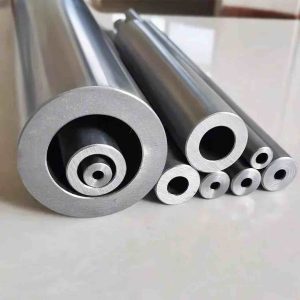
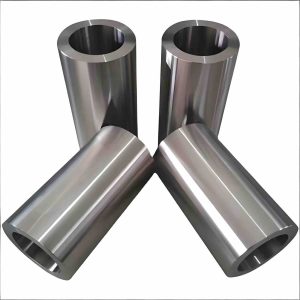
Forged Titanium Rings


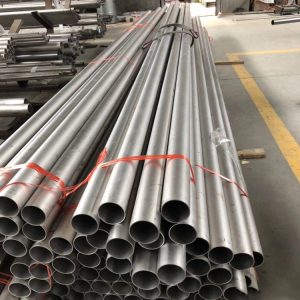
Titanium Alloy Forged Rings are high-performance components designed for industries that require strength, durability, and resistance to extreme environments. Made from top-quality titanium alloys such as TA1, TA2, TA9, TC4, GR1, GR2, and GR5, these rings are lightweight yet incredibly strong. They are widely used in aerospace, automotive, marine, medical, and chemical industries due to their unmatched properties.
Titanium Alloy Forged Rings are manufactured using advanced forging techniques and adhere to international standards such as GB/T 16598 and ASME SB381. These rings offer superior resistance to corrosion, wear, and extreme temperatures, making them ideal for demanding applications.
Available in various grades like GR5, GR7, and GR12, these rings feature versatile surface finishes, including forged, rolled, smooth, and polished. This ensures high precision, excellent aesthetics, and functionality to meet specific project needs.
- Description
- Inquiry
Description
The Forged Titanium Rings has good technical and economic effects, which are manifested in the following aspects:
1. The tonnage of the equipment is small, the investment is small, and the processing range is wide. Ring rolling deformation realizes ring forming through the accumulation of local deformation.
2. No special mold is needed, and the production cost is low. Ring production only needs one set of rolls to solve the problem of producing various rings of different sizes.
3. The dimensional accuracy of the ring is high, the machining allowance is small, and the material utilization rate is high. The geometric accuracy of the ring formed by rolling is equivalent to that of the die forging, and the punching and skin of the billet are small, which not only consumes flash material.
Product Introduction of Titanium Alloy Forged Rings
Titanium Alloy Forged Rings are high-performance components designed for industries that require strength, durability, and resistance to extreme environments. Made from top-quality titanium alloys such as TA1, TA2, TA9, TC4, GR1, GR2, and GR5, these rings are lightweight yet incredibly strong. They are widely used in aerospace, automotive, marine, medical, and chemical industries due to their unmatched properties.
Product Overview
Titanium Alloy Forged Rings are manufactured using advanced forging techniques and adhere to international standards such as GB/T 16598 and ASME SB381. These rings offer superior resistance to corrosion, wear, and extreme temperatures, making them ideal for demanding applications.
Available in various grades like TA10, GR7, and GR12, these rings feature versatile surface finishes, including forged, rolled, smooth, and polished. This ensures high precision, excellent aesthetics, and functionality to meet specific project needs.
Key Features of Titanium Alloy Forged Ring
- Lightweight and Strong:
Titanium alloy rings are 45% lighter than steel but maintain exceptional strength, making them perfect for applications where weight reduction is critical, such as in aerospace and automotive sectors. - Corrosion Resistance:
The rings resist rust and corrosion caused by seawater, chemicals, and harsh environments, ensuring long-term durability. - Customizable Surface Finishes:
Options include forged, rolled, smooth, and polished surfaces, providing both aesthetic appeal and practical advantages. - High-Temperature Tolerance:
Titanium alloys can withstand extreme heat without losing their structural integrity, making them suitable for high-performance applications. - Wide Range of Grades:
With multiple material options like GR5, TA1, and TC4, these rings can cater to diverse industrial requirements. - Adherence to Standards:
Manufactured in compliance with GB/T 16598 and ASME SB381, the rings meet stringent quality and safety benchmarks.
Applications
Titanium Alloy Forged Rings serve various industries:
- Aerospace:
Used in jet engines, turbine blades, and structural components due to their strength-to-weight ratio and heat resistance. - Automotive:
Lightweight and corrosion-resistant properties make these rings ideal for high-performance vehicles, reducing weight and improving efficiency. - Medical:
Non-toxic and biocompatible, titanium alloy rings are used in surgical implants and medical devices. - Marine:
Resistant to seawater corrosion, these rings are suitable for shipbuilding and offshore applications. - Chemical and Petrochemical:
Used in reactors, heat exchangers, and piping systems, as they resist chemical corrosion and high temperatures. - Electroplating and Electrolysis:
Provide excellent performance in industrial processes involving electricity and chemical reactions.
Advantages
- Lightweight design reduces overall equipment weight.
- Excellent corrosion resistance ensures long service life.
- Versatile surface finishes meet aesthetic and functional requirements.
- High strength supports demanding industrial applications.
- Suitable for harsh environments like marine and chemical settings.

4. The internal quality of ring parts is good. Roll-formed rings have dense internal structure, fine grains, and fibers arranged in the circumferential direction, and their tensile strength and fatigue life are significantly higher than those of other forged and machined rings.
5. High productivity. The maximum productivity of rings using the rolling production method has reached 1000 pieces/h, which is much higher than the free forging and flame cutting of rings, and also higher than the productivity of die forging.
6. Save material. The metal utilization rate of ring rolling can usually reach about 90%, while the metal loss of forging method is as high as 20%~40%.
The above reasons make the rolling cost of Forged Titanium Rings lower than other production methods. It can be seen that for the production of various rings, especially the rings of hard-to-deform materials used in engines in the fields of aviation and aerospace, the rolling manufacturing technology has good technical and economical efficiency.
Titanium forging is a specialized manufacturing process that transforms titanium alloys into high-performance components. This process is crucial in various industries, including aerospace, automotive, and medical sectors, due to titanium’s unique properties. In this article, we will explore the intricacies of titanium forging, its benefits, applications, and the reasons behind its growing importance in modern manufacturing.
Understanding Titanium Forging
What Is Titanium Forging?
Titanium forging involves shaping titanium alloys through the application of compressive forces. This process can be performed at various temperatures, typically categorized into hot forging and cold forging. Hot forging is conducted at elevated temperatures, which allows for easier manipulation of the metal, while cold forging is done at or near room temperature, resulting in enhanced strength and surface finish. The choice between hot and cold forging depends on the specific requirements of the component being produced, including its intended use and the desired mechanical properties.
The forging process is not just about shaping the metal; it also significantly alters its microstructure. This alteration can lead to improved grain flow, which enhances the mechanical properties of the final product. As a result, forged titanium components often exhibit superior strength, toughness, and fatigue resistance compared to those produced through other methods, such as casting or machining.
The Forging Process
The titanium forging process generally includes several key steps:
1. Material Selection: The first step involves selecting the appropriate titanium alloy based on the specific requirements of the application. Different grades of titanium offer varying properties, such as strength, corrosion resistance, and weight. For instance, Grade 5 titanium, also known as Ti-6Al-4V, is one of the most commonly used alloys due to its excellent strength-to-weight ratio and corrosion resistance.
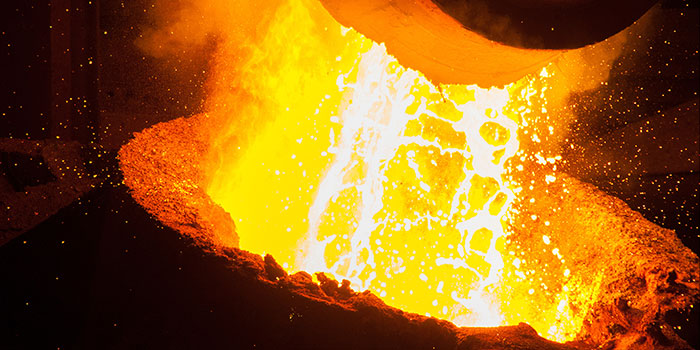
2. Heating: For hot forging, the titanium billet is heated to a temperature that makes it malleable. This temperature is critical as it affects the material’s mechanical properties and the final product’s quality. Typically, the heating process is carefully controlled to ensure uniform temperature distribution, which is essential for achieving consistent results.
3. Forging: The heated titanium is then placed in a forging press, where it is shaped into the desired form through the application of force. This can be done using various methods, including die forging, open-die forging, and closed-die forging. Each method has its advantages and is chosen based on the complexity of the part and the production volume required.
4. Cooling: After forging, the component is cooled, often in air or through controlled cooling methods, to achieve the desired mechanical properties. The cooling rate can influence the final microstructure of the titanium, affecting its hardness and strength.
5. Finishing: The final step may involve additional processes such as machining, surface treatment, or heat treatment to enhance the component’s performance and appearance. These finishing processes are crucial for achieving the precise tolerances and surface finishes required for high-performance applications.
Benefits of Titanium Forging
Titanium forging offers numerous advantages over other manufacturing methods:
– Enhanced Mechanical Properties: Forging improves the strength and toughness of titanium alloys, making them suitable for high-stress applications. The process aligns the grain structure of the metal, which contributes to its overall strength and durability.
– Weight Reduction: Titanium is known for its excellent strength-to-weight ratio, which is further enhanced through forging. This makes it ideal for aerospace and automotive applications where weight is a critical factor. Lighter components can lead to improved fuel efficiency and performance, which is increasingly important in today’s environmentally conscious market.
– Corrosion Resistance: Titanium naturally forms a protective oxide layer, making forged titanium components highly resistant to corrosion, which is essential in harsh environments. This property is particularly valuable in industries such as marine and chemical processing, where exposure to corrosive substances is common.
– Versatility: The forging process can produce a wide range of shapes and sizes, allowing for customization based on specific application needs. This versatility enables manufacturers to create complex geometries that would be difficult or impossible to achieve with other methods.
Applications of Titanium Forging
Aerospace Industry
In the aerospace sector, titanium forging is extensively used to manufacture components such as aircraft frames, engine parts, and landing gear. The lightweight and high-strength characteristics of titanium make it an ideal choice for reducing overall aircraft weight while maintaining structural integrity. As the aerospace industry continues to push for more fuel-efficient and environmentally friendly aircraft, the demand for titanium components is expected to rise.
Additionally, titanium’s resistance to extreme temperatures and fatigue makes it suitable for critical applications in jet engines and other high-performance systems. The ability to withstand harsh operating conditions without compromising performance is a key factor in the selection of titanium for aerospace applications.
Automotive Industry
The automotive industry is increasingly adopting titanium forging for components like exhaust systems, suspension parts, and engine components. The use of titanium helps improve fuel efficiency and performance due to its lightweight nature. As automakers strive to meet stringent emissions regulations and consumer demand for better fuel economy, titanium’s properties offer a compelling solution.
Moreover, titanium’s durability and resistance to corrosion extend the lifespan of automotive components, reducing maintenance costs and enhancing vehicle reliability. This is particularly important in high-performance vehicles, where every ounce of weight savings can translate into improved speed and handling.
Medical Applications
Titanium’s biocompatibility makes it a preferred material for medical implants and devices. Forged titanium components are used in orthopedic implants, dental implants, and surgical instruments, where strength and corrosion resistance are paramount. The ability of titanium to integrate with bone tissue, known as osseointegration, is a significant advantage in orthopedic applications, leading to better patient outcomes.
In addition to implants, titanium is also used in various surgical tools and devices, where its lightweight and strength contribute to improved ergonomics and ease of use for medical professionals. The growing demand for minimally invasive surgical techniques further drives the need for advanced titanium components in medical applications.
Marine Applications
In marine environments, titanium’s resistance to saltwater corrosion makes it an excellent choice for components in ships and submarines. Forged titanium parts are used in propellers, hulls, and various fittings. The longevity and reliability of titanium components in harsh marine conditions reduce the need for frequent replacements, leading to cost savings for operators.
Furthermore, as the marine industry seeks to adopt more sustainable practices, titanium’s recyclability and low environmental impact during production make it an attractive option for manufacturers looking to minimize their ecological footprint.
The Future of Titanium Forging
Innovations in Forging Technology
As industries continue to seek lighter and stronger materials, the demand for titanium forging is expected to grow. Innovations in forging technology, such as advanced computer modeling and automation, are enhancing the efficiency and precision of the forging process. These advancements allow manufacturers to produce complex shapes with tighter tolerances, further expanding the applications of titanium forging.
Additionally, the integration of additive manufacturing techniques with traditional forging processes is being explored. This hybrid approach can lead to the creation of components that combine the best attributes of both methods, resulting in parts that are not only strong and lightweight but also cost-effective to produce.
Sustainability Considerations
Sustainability is becoming increasingly important in manufacturing. Titanium forging processes are being optimized to reduce waste and energy consumption. Additionally, the recyclability of titanium makes it an environmentally friendly choice, aligning with global efforts to promote sustainable manufacturing practices. The ability to recycle titanium scrap back into the production process not only conserves resources but also reduces the overall environmental impact of titanium manufacturing.
As industries face growing pressure to adopt sustainable practices, the role of titanium forging in producing eco-friendly components will likely become more prominent. Manufacturers that prioritize sustainability in their operations will be better positioned to meet the demands of environmentally conscious consumers and regulatory bodies.
Conclusion
Titanium forging is a vital process that leverages the unique properties of titanium alloys to produce high-performance components across various industries. Its benefits, including enhanced mechanical properties, weight reduction, and corrosion resistance, make it an indispensable technology in modern manufacturing. As innovations continue to emerge, the future of titanium forging looks promising, with expanded applications and improved sustainability practices.