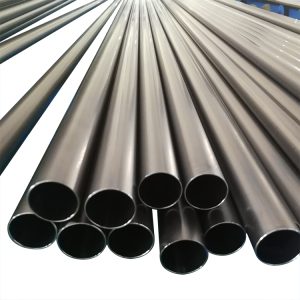
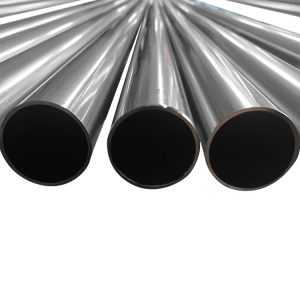
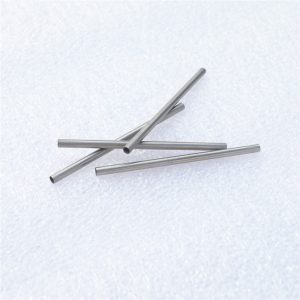
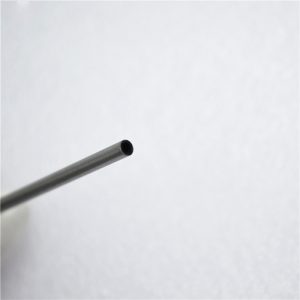
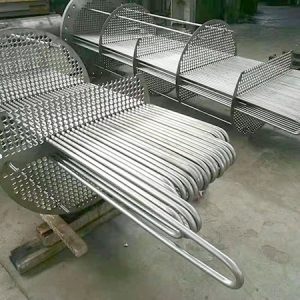
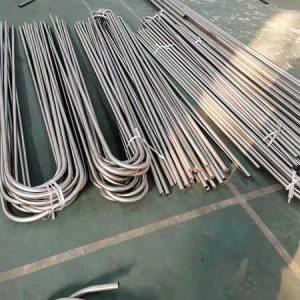
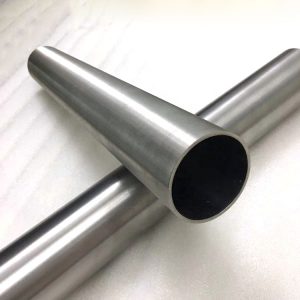
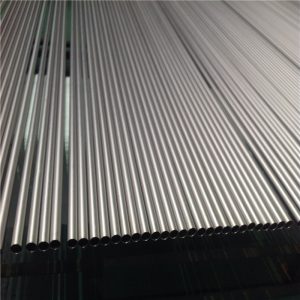
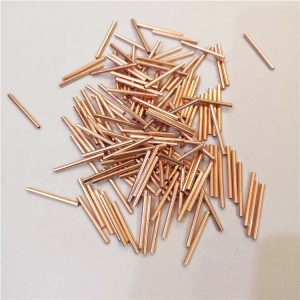
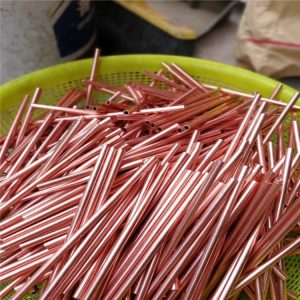
Capillary Titanium Tubes


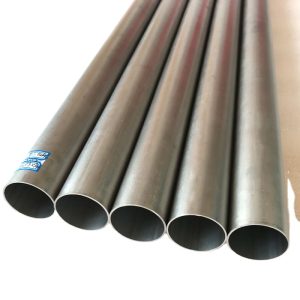
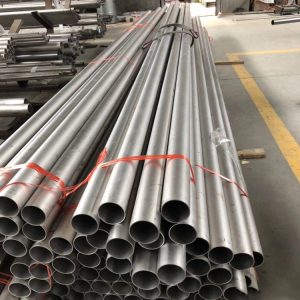
The main reasons for the widespread use of titanium tube capillaries include their excellent physical and chemical properties, wide application areas, and unique advantages in specific situations.
Firstly, titanium tube capillaries have the following significant advantages:
Lightweight: The density of titanium tubes is about half that of steel tubes, making them lighter in weight and easier to transport and install.
Strong corrosion resistance: Titanium metal performs well in harsh environments such as acid, alkali, and salt water, is not easy to rust, and has a longer lifespan
High strength: Titanium tubes have high strength and stiffness, and can withstand greater pressure and load
High temperature resistance: Titanium tubes have a high melting point and are suitable for use in high-temperature environments
Good biocompatibility: Titanium metal has good biocompatibility with the human body and biological tissues, and is widely used in fields such as medical devices and artificial joints
Good mechanical properties: Titanium metal has good toughness and plasticity, making it easy to process into various shapes and sizes
- Description
- Inquiry
Description
Titanium tubes– Aerospace Applications
Titanium is used in engine applications such as rotors, compressor blades, hydraulic system components and nacelles. Titanium 6AL-4V alloy accounts for almost 50% of all alloys used in aircraft applications.
Due to their high tensile strength to density ratio, high corrosion resistance, and ability to withstand moderately high temperatures without creeping, titanium alloys are used in aircraft, armor plating, naval ships, spacecraft, and missiles. For these applications titanium alloyed with aluminium, vanadium, and other elements is used for a variety of components including critical structural parts, fire walls, landing gear, exhaust ducts (helicopters), and hydraulic systems. In fact, about two thirds of all titanium metal produced is used in aircraft engines and frames.
Titanium tubes– Industrial Applications
Titanium is used in engine applications such as rotors, compressor blades, hydraulic system components and nacelles. Titanium 6AL-4V alloy accounts for almost 50% of all alloys used in aircraft applications.
Due to their high tensile strength to density ratio, high corrosion resistance, and ability to withstand moderately high temperatures without creeping, titanium alloys are used in aircraft, armor plating, naval ships, spacecraft, and missiles. For these applications titanium alloyed with aluminium, vanadium, and other elements is used for a variety of components including critical structural parts, fire walls, landing gear, exhaust ducts (helicopters), and hydraulic systems. In fact, about two thirds of all titanium metal produced is used in aircraft engines and frames.
Titanium tubes– Consumer and Architectural Applications
Titanium metal is used in automotive applications, particularly in automobile or motorcycle racing, where weight reduction is critical while maintaining high strength and rigidity. Titanium is used in many sporting goods: tennis rackets, golf clubs, lacrosse stick shafts, cricket, hockey, lacrosse and football helmet grills, and bicycle frames and components. Titanium alloys are also used in spectacle frames. The two most common Titanium alloys used in the cycling industry are 6AL-4V (Grade 5) and 3AI-2.5V (Grade). These two different alloys are both high strength Titanium and are both fairly common in the Industry.
Titanium tubes– Medical Applications
Because it is bio-compatible (non-toxic and is not rejected by the body), Titanium is used in different medical applications including surgical implements and implants, such as hip balls and sockets (joint replacement) that can stay in place for up to 20 years. Titanium has the inherent property to osseointegrate, enabling use in dental implants that can remain in place for over 30 years. This property is also useful for orthopedic implant applications. Titanium is also used for the surgical instruments used in image-guided surgery, as well as wheelchairs, crutches, and any other products where high strength and low weight are desirable. The unique qualities of titanium also prove to be MRI (Magnetic Resonance Imaging) and CT (Computed Tomography) compatible.
If any questions,please feel free to contact sales@tubesolutions.com.cn
Name | Titanium Tube & Pipe |
Standard | ASTM B338/ASME SB338, ASTM B337/ASME SB337, ASTM B861/ASME SB861, ASTM B862/ASME SB862,AMS4911,AMS4928 |
Material Grade | Gr1, Gr2, Gr4, Gr7, Gr9, Gr11, Gr12, etc |
Length | short cut or standard length or coil |
Size(mm) | Diameter 1.00-8.00mm |
Section shape | Round / Square,etc |
Tolerance | a) Outer Diameter: +/- 0.05mm |
b) Thickness: +/- 0.05mm | |
c) Length: +/- 0.5mm | |
Surface | Pickling, annealing, polishing, bright. |
Feature | 1.Low Density and High Strength 2.Excellent Corrosion Resistance 3.Good resistance to effect of heat 4.Excellent Bearing to cryogenic property 5.Nonmagnetic and Non-toxic 6.Good thermal properties 7.Low Modulus of Elasticity |
Test | Squash test, extended test, water pressure test, crystal rot test, heat treatment, NDT |


The main reasons for the widespread use of titanium tube capillaries include their excellent physical and chemical properties, wide application areas, and unique advantages in specific situations.
Firstly, titanium tube capillaries have the following significant advantages:
Lightweight: The density of titanium tubes is about half that of steel tubes, making them lighter in weight and easier to transport and install
Strong corrosion resistance: Titanium metal performs well in harsh environments such as acid, alkali, and salt water, is not easy to rust, and has a longer lifespan
High strength: Titanium tubes have high strength and stiffness, and can withstand greater pressure and load
High temperature resistance: Titanium tubes have a high melting point and are suitable for use in high-temperature environments
Good biocompatibility: Titanium metal has good biocompatibility with the human body and biological tissues, and is widely used in fields such as medical devices and artificial joints
Good mechanical properties: Titanium metal has good toughness and plasticity, making it easy to process into various shapes and sizes
Secondly, titanium tube capillaries have a wide range of applications in multiple fields:
Medical devices: Due to the good biocompatibility of titanium tubes, they do not have adverse effects on human tissues and are commonly used in the production of precision fluid delivery pipelines
Chemical industry: When transporting highly corrosive media, large-diameter titanium pipes, with their excellent corrosion resistance, can ensure the long-term stable operation of pipeline systems
Aerospace: Titanium alloys have become important structural materials in industrial fields such as aviation and aerospace due to their excellent mechanical properties at room temperature and high temperature, as well as outstanding corrosion resistance
In addition, titanium capillary tubes come in various specifications to meet different needs. For example, small-diameter titanium tubes are commonly used in applications where there are strict requirements for pipeline size and relatively low medium flow rates, such as in the field of medical devices