Description
Introduction to Industrial Nickel‑Titanium (Nitinol) Tubing
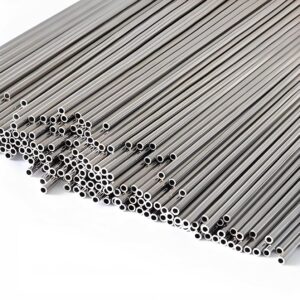
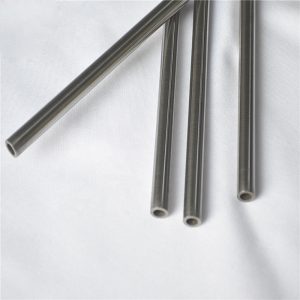
Nickel‑titanium (NiTi) industrial tubing, commonly known as nitinol tubing, is a high‑performance functional alloy tube engineered for demanding industrial environments. Composed of approximately 50–55% nickel and balanced titanium, it combines exceptional shape‑memory effect (SME), superelasticity, outstanding corrosion resistance, high fatigue life, and favorable mechanical stability. Unlike conventional metal tubing such as stainless steel, copper, or aluminum, nitinol industrial tubing can withstand up to 8–10% recoverable strain, far exceeding the elastic limit of ordinary metals. Manufactured to strict industrial standards including ASTM F2063 and GB 24627, it serves as a critical component in aerospace, automotive, robotics, energy, marine engineering, precision instruments, and smart mechanical systems. Its unique responsive behavior enables adaptive structures, thermal actuation, vibration damping, and self‑repairing connections, making it irreplaceable in modern high‑tech manufacturing.
Core Material Properties
The performance of industrial nitinol tubing is defined by two signature effects derived from reversible phase transformation between austenite and martensite.
Shape‑memory effect allows the tube to “remember” its original shape. After deformation at low temperatures, it fully recovers its preset geometry when heated to a specific transition temperature (Af). This enables thermal actuation, self‑expanding connectors, and temperature‑responsive components.
Superelasticity (pseudoelasticity) allows the tube to endure large‑scale bending, twisting, or compression at ambient temperatures and instantly rebound to its original form without permanent deformation. This provides exceptional kink resistance, shock absorption, and flexibility in dynamic systems.
Additional key properties include:
- Excellent corrosion resistance: Stable in seawater, acidic, alkaline, and chloride‑containing environments, outperforming many stainless steels.
- High fatigue strength: Resists cracking under millions of cyclic loads, ideal for long‑service dynamic parts.
- Lightweight and high strength: Density around 6.45 g/cm³ with tensile strength exceeding 1000 MPa, supporting lightweight structural design.
- Good machinability: Supports laser cutting, electrochemical etching, flaring, necking, and bending for complex geometries.
- Wide temperature adaptability: Stable performance across −50 °C to 150 °C, suitable for extreme industrial environments.
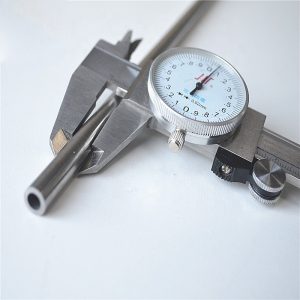
- Dimensional precision: Outer diameter from 0.2 mm to 20 mm, wall thickness from 0.05 mm to 3 mm, with tight tolerances for precision assembly.
Manufacturing Process
Industrial nitinol tubing is produced through a highly controlled process to ensure consistent performance.
- Raw material preparation: High‑purity nickel and titanium are melted via vacuum induction melting (VIM) and electroslag remelting (ESR) to minimize impurities.
- Tube forming: Hot extrusion followed by multi‑pass cold drawing to achieve seamless tubes with fine grain structure.
- Heat treatment: Precise thermal processing sets transition temperature and stabilizes shape‑memory and superelastic properties.
- Secondary machining: Laser cutting, CNC forming, and surface treatment create slots, holes, flares, and custom profiles.
- Surface finishing: Electropolishing, passivation, and ultrasonic cleaning improve smoothness, corrosion resistance, and cleanliness.
- Quality inspection: Dimensional measurement, mechanical testing, DSC phase‑temperature analysis, corrosion testing, and non‑destructive testing ensure compliance with industrial specifications.
Major Industrial Applications
Aerospace
Nitinol tubing is used in thermal actuators, deployable structures, self‑locking connectors, and vibration‑damping components. Its lightweight and responsive nature supports satellite antennas, engine control valves, and adaptive hydraulic lines, improving reliability in extreme temperature and vibration conditions.
Automotive Engineering
Applied in thermal safety valves, exhaust control actuators, flexible fluid lines, and sensor protective sleeves. Superelasticity reduces damage from vibration and impact, while shape‑memory actuation enhances automatic temperature‑responsive control.
Robotics & Precision Instruments
Used in flexible arm sleeves, micro‑actuators, adaptive grippers, and precision sensor housings. Its high flexibility and dimensional stability enable compact, durable motion systems for industrial robots and optical devices.
Energy & Marine Engineering
Ideal for offshore piping connectors, seawater‑resistant fluid lines, subsea actuator components, and heat‑exchange tubing. Excellent corrosion resistance extends service life in marine and petrochemical environments.
Electronics & Telecommunications
Serves as protective tubing for micro‑cables, flexible antenna elements, and thermal‑responsive connectors. Its small size and fatigue resistance support miniaturized, high‑reliability electronic devices.
Mechanical Engineering & Smart Systems
Used in self‑expanding pipe couplings, vibration dampers, safety release mechanisms, and adaptive fasteners. Shape‑memory function simplifies assembly and improves system fault tolerance.
Advantages Over Traditional Tubing
Compared with stainless steel tubing, nitinol offers 10–20 times greater elastic deformation, better fatigue life, and superior corrosion resistance. Compared with copper and aluminum tubes, it provides higher strength, better thermal stability, and functional responsiveness. Compared with titanium alloy tubing, it delivers unique shape‑memory and superelastic performance at a more competitive cost for industrial applications. These advantages make nitinol tubing the preferred choice where conventional materials fail to meet dynamic, high‑flexibility, or extreme‑environment requirements.
Nickel-titanium (Nitinol) industrial tubing is widely applied in various high-tech industrial fields, leveraging its unique shape-memory effect, superelasticity, corrosion resistance, and high fatigue strength. Its main application areas are as follows:
1. Aerospace
It is used in thermal actuators, deployable structures (such as satellite antennas), self-locking connectors, and vibration-damping components. Its lightweight and temperature-responsive properties make it suitable for engine control valves and adaptive hydraulic lines, ensuring reliable operation under extreme temperature and vibration conditions in aerospace environments.
2. Automotive Engineering
It is applied in thermal safety valves, exhaust control actuators, flexible fluid lines, and sensor protective sleeves. The superelasticity of nitinol industrial tubing reduces damage caused by vehicle vibration and impact, while its shape-memory actuation function enhances the automatic temperature-responsive control of automotive systems.
3. Robotics & Precision Instruments
It serves as flexible arm sleeves, micro-actuators, adaptive grippers, and precision sensor housings. Its high flexibility and dimensional stability enable the development of compact, durable motion systems for industrial robots and high-precision optical instruments.
4. Energy & Marine Engineering
It is ideal for offshore piping connectors, seawater-resistant fluid lines, subsea actuator components, and heat-exchange tubing. Its excellent corrosion resistance allows it to withstand harsh marine and petrochemical environments, significantly extending the service life of related equipment.
5. Electronics & Telecommunications
It is used as protective tubing for micro-cables, flexible antenna elements, and thermal-responsive connectors. Its small size, light weight, and strong fatigue resistance support the miniaturization and high reliability of electronic and telecommunication devices.
6. Mechanical Engineering & Smart Systems
It is applied in self-expanding pipe couplings, vibration dampers, safety release mechanisms, and adaptive fasteners. The shape-memory function of nitinol industrial tubing simplifies the assembly process of mechanical systems and improves their fault tolerance.