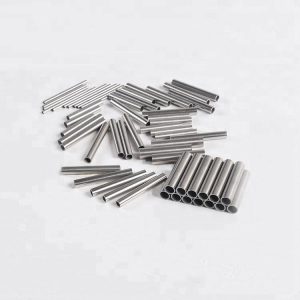
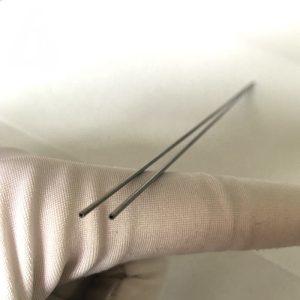
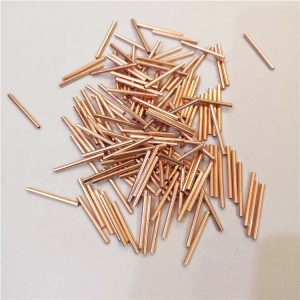
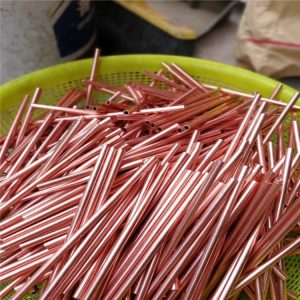
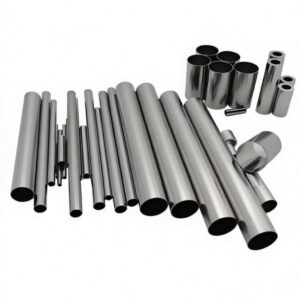
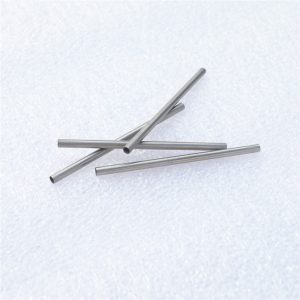
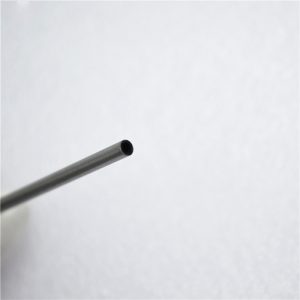
Nitinol Medical Tubing


Nickel‑titanium (nitinol) medical tubing stands as a cornerstone of 21st‑century medical technology, merging advanced materials science with life‑saving clinical utility. Its unparalleled superelasticity, shape‑memory effect, biocompatibility, and precision have unlocked a new era of minimally invasive care—reducing surgical trauma, shortening recovery times, and improving outcomes for millions. As regulatory standards rise and medical innovation accelerates, nitinol tubing will remain at the forefront of implantable and interventional device development. For manufacturers, clinicians, and patients alike, high‑quality nitinol tubing is not merely a component but a critical enabler of safer, more effective, and more accessible healthcare worldwide. With ongoing advances in alloy design, surface engineering, and manufacturing precision, nitinol tubing will continue to expand its therapeutic reach, reinforcing its status as the most versatile and impactful smart material in modern medicine.
- Description
- Inquiry
Description

Core Material Properties: The Science of Nitinol Tubing
1. Shape‑Memory Effect (SME)
2. Superelasticity (Pseudoelasticity)
3. Biocompatibility & Corrosion Resistance
4. Mechanical Durability
5. Precision & Machinability
Precision Manufacturing of Medical Nitinol Tubing
- Raw Material Preparation: High‑purity nickel and titanium are vacuum‑induction melted (VIM) and electroslag remelted (ESR) to produce ingots with ultra‑low impurities (C, Fe, O < 0.05% total), certified to ASTM F2063.
- Hot & Cold Forming: Ingots are extruded or drawn into seamless tubes through multiple cold‑drawing passes with intermediate annealing to refine grain structure and preserve superelastic properties.
- Heat Treatment: Precise thermal processing sets the transformation temperature (Af) to align with body temperature (30–37°C) and locks in the shape‑memory effect.
- Precision Machining: Laser cutting or chemical etching creates intricate geometries (stent meshes, side holes, slots) with burr‑free edges.
- Surface Treatment: Electropolishing and passivation remove surface defects, form a protective TiO₂ layer, reduce roughness, and lower nickel release.
- Cleaning & Packaging: Ultrasonic cleaning, high‑purity rinsing, and hermetic, sterile packaging ensure cleanliness for clinical use.
- Quality Assurance: Full testing includes dimensional inspection, phase‑transition temperature analysis (DSC), mechanical testing, corrosion resistance, biocompatibility (ISO 10993), and non‑destructive testing (NDT).
Key Medical Applications of Nitinol Tubing
1. Cardiovascular & Vascular Devices (Largest Application)
- Self‑Expanding Stents: Laser‑cut nitinol tubes form the backbone of coronary, peripheral, and neurovascular stents. Collapsed for catheter delivery, they expand at body temperature to scaffold vessel walls, restore blood flow, and resist recoil.
- Embolic Protection Filters & Occlusion Devices: Used in carotid, aortic, and left atrial appendage closure devices to trap clots or seal defects without invasive surgery.
- Catheter & Guidewire Components: Superelastic nitinol tubing reinforces catheter shafts, provides kink resistance, and enables precise tracking through tortuous vessels.
2. Minimally Invasive Surgical Instruments
- Endoscopic & Laparoscopic Tools: Thin‑walled nitinol tubes serve as sheaths, graspers, and cutter guides, flexing through body cavities while maintaining rigidity.
- Thrombectomy & Atherectomy Devices: Nitinol tubing supports retrievers and drills that navigate vessels to remove clots or plaque.
- Ophthalmic & Spinal Tools: Micro‑nitinol tubes enable minimally invasive intraocular and spinal procedures with reduced trauma.
3. Non‑Vascular Stents & Implants
- Digestive & Respiratory Stents: Esophageal, biliary, colonic, and tracheal stents treat strictures from cancer or inflammation—expanding to maintain lumen patency.
- Urological Stents: Ureteral and urethral stents use superelasticity to adapt to peristalsis and prevent mucosal injury.
4. Orthopedics & Dental
- Orthopedic Implants: Nitinol tubes are used in intramedullary nails, external fixator components, and spinal implants, offering flexibility that reduces stress shielding.
- Dental Appliances: Orthodontic archwires and endodontic files leverage shape‑memory to apply constant, gentle forces for tooth movement or root‑canal shaping.
5. Electrophysiology & Drug Delivery
- Ablation & Mapping Catheters: Nitinol tubing houses electrodes and wires for cardiac arrhythmia treatment.
- Drug‑Eluting Implants: Micro‑patterned nitinol tubes act as carriers for localized drug delivery, improving healing and reducing infection.
Advantages Over Traditional Materials
- 10–20× greater elastic deformation (8–10% vs. <0.5% strain)
- Superior kink resistance and flexibility for navigation
- Better fatigue life under cyclic loading
- More biomechanically compatible with soft tissues and bone
- Lower cost and better manufacturability for complex micro‑parts
- Superior superelasticity and shape‑memory functionality
- Lighter weight and higher specific strength
Future Trends & Innovations
- Ultra‑Fine Micro‑Tubing: OD <0.3 mm for neurointervention and precision micro‑devices.
- Surface Functionalization: Bioactive coatings (hydroxyapatite, heparin, antibiotics) to enhance osseointegration, reduce thrombosis, and prevent infection.
- Nickel‑Free & Low‑Nickel Alloys: For patients with nickel hypersensitivity.
- Smart Nitinol Tubing: Integrated micro‑sensors for real‑time in‑vivo monitoring of pressure, flow, or healing.
- 3D Printing & Customization: Patient‑specific nitinol implants for personalized surgery.
Active Austenite Finish Temperature
The austenite finish temperature of the finished tube (active Af) with outer diameter in the range of 0.3 to 3.0 mm (0.012 to 0.12 in.) shall be measured on representative full round tube sample(s) using the bend and free recovery method described in Test Method ASTM F 2082-15.
The Mechanical Properties
| Condition | UTS σb MPa | Elongation δ% | Upper Plateau Stress UPS MPa | Permanent set after 6% strain % | Active Af ℃ |
| Superelastic | ≥1000 | ≥10 | ≥380 | <0.3 | ≤15 |
* Superelastic properties are measured per Test Method ASTM F2516 at room temperature (22+/-2C)
* Applicable Standard: ASTM F2633
Surface Finish
● Outer surface: Oxide or Centerless-ground.
● Inner surface: Etched or Oxide.
Nominal Dimensions and Tolerances
Dimensions tolerances of Guide Tube:
OD | OD Tolerances | ID Tolerances |
OD≤0.3mm | ±0.005mm | ±0.010mm |
0.3mm<OD≤1.5mm | ±0.010mm | ±0.010mm |
1.5mm<OD≤2.5mm | ±0.010mm | ±0.020mm |
2.5mm<OD≤3.5mm | ±0.020mm | ±0.020mm |
3.5mm<OD≤10.0mm | ±0.020mm | ±0.020mm |
10.0mm<OD | ±0.030mm | ±0.030mm |
Dimensions tolerances of Stent Tube:
OD | OD Tolerances | ID Tolerances |
0.3mm<OD≤0.6mm | ±0.010mm | ±0.010mm |
0.6mm<OD≤1.5mm | ±0.013mm | ±0.013mm |
1.5mm<OD≤2.5mm | ±0.015mm | ±0.015mm |
2.5mm<OD≤3.5mm | ±0.015mm | ±0.015mm |
3.5mm<OD≤5.0mm | ±0.020mm | ±0.025mm |
5.0mm<OD≤8.0mm | ±0.020mm | ±0.025mm |
8.0mm<OD | ±0.030mm | ±0.030mm |