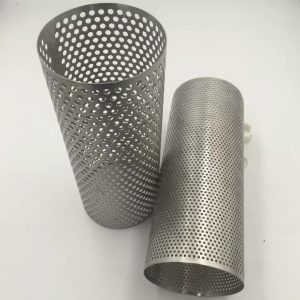
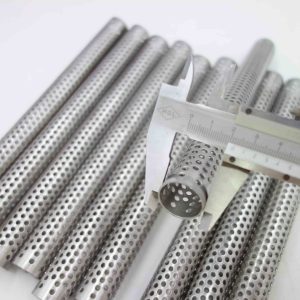
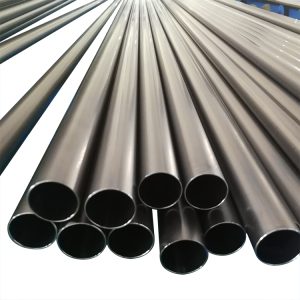
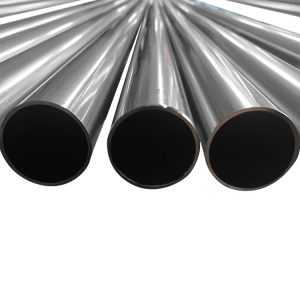
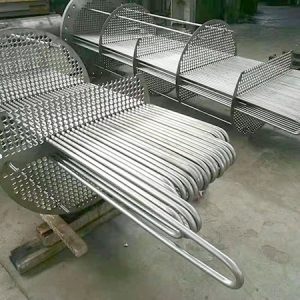
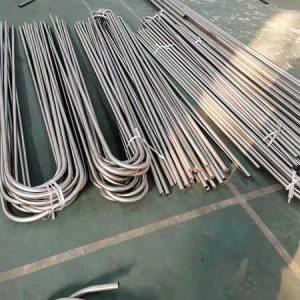
Thin Wall Titanium Tubes


Titanium tube is a new type of metal material that has completely replaced traditional iron and steel pipes in some aspects. So, what enables it to quickly spread and replace traditional materials in pipes? Let’s take a look at the advantages of titanium tubes:
1. Titanium tubes have high specific strength. The density of titanium alloy is generally around 4.5g/cm3, which is only 60% of that of steel. The strength of pure titanium is close to that of ordinary steel, and some high-strength titanium alloys exceed the strength of many alloy structural steels. Therefore, the specific strength (strength/density) of titanium alloy is much higher than other metal structural materials, which can produce components with high unit strength, good rigidity, and light weight. At present, titanium alloys are used for engine components, skeletons, skins, fasteners, and landing gear of aircraft.
2. Titanium tubes have high thermal strength. The operating temperature is several hundred degrees higher than that of aluminum alloy, and it can still maintain the required strength at moderate temperatures. It can work for a long time at temperatures of 450-500 ℃. These two types of titanium alloys still have high specific strength in the range of 150 ℃ to 500 ℃, while aluminum alloys show a significant decrease in specific strength at 150 ℃. The working temperature of titanium alloy can reach 500 ℃, while that of aluminum alloy is below 200 ℃.
3. Titanium tubes have good corrosion resistance. Titanium alloys work in humid atmospheres and seawater media, and their corrosion resistance is much better than stainless steel; Has particularly strong resistance to pitting corrosion, acid corrosion, and stress corrosion; Has excellent corrosion resistance to alkali, chloride, organic substances such as chlorine, nitric acid, sulfuric acid, etc.
4. Titanium tubes have good low-temperature performance. Titanium alloys can maintain their mechanical properties at low and ultra-low temperatures. Titanium alloys with good low-temperature performance and extremely low interstitial elements, such as TA7, can maintain a certain degree of plasticity at -253 ℃. Therefore, titanium alloy is also an important low-temperature structural material.
5. Titanium tubes have high chemical reactivity. Titanium has high chemical activity and reacts strongly with oxygen, nitrogen, hydrogen, CO, CO2, water vapor, ammonia, and other substances in the atmosphere. When the carbon content is greater than 0.2%, hard TiC will form in the titanium alloy; When the temperature is high, the interaction with N will also form a TiN hard surface layer; At temperatures above 600 ℃, titanium absorbs oxygen to form a hardened layer with high hardness; An increase in hydrogen content can also form a brittle layer. Titanium has a high chemical affinity and is prone to adhesion with friction surfaces.
6. Titanium tubes have low thermal conductivity and elastic modulus. The elastic modulus of titanium alloy is about half of that of steel, so it has poor rigidity and is prone to deformation. It is not suitable for making slender rods and thin-walled parts. During cutting, the springback of the machined surface is large, about 2-3 times that of stainless steel, causing severe friction, adhesion, and bonding wear on the back surface of the tool.
- Description
- Inquiry
Description
Titanium Tube is half the weight of steel, so because it has a lower mass, it can be just as strong (as steel) at half the weight. Titanium Seamless Tube is characterized by its high strength to weight ratio. It is quite ductile in an oxygen free environment and has a low density. Titanium Alloy Tube has a very high melting point, which is even greater than 1650 degrees Centigrade or 3000 degrees Fahrenheit. Titanium Tubinghas the chemical symbol Ti. ASTM B338 Titanium Tube is paramagnetic alloy. Titanium Welded Tube is costly compared to Aluminium.
Titanium seamless & welded tubing has double the strength of aluminium & ASME SB338 Titanium Tubeis about 60% denser than aluminium. Titanium NCF Tubes is a silvered colored metal with low density and high strength. Titanium Micro Tubes are strong and lightweight making them ideal for automotive, aerospace, military and industrial applications. ASTM B338 Titanium Alloy boiler tubes is considered to be one of the strongest metals. These applications range from medical implants to airplanes and ships. Pure Titanium condenser tube is strong and corrosive resistant.
Titanium tube is a new type of metal material that has completely replaced traditional iron and steel pipes in some aspects. So, what enables it to quickly spread and replace traditional materials in pipes? Let’s take a look at the advantages of titanium tubes:
1. Titanium tubes have high specific strength. The density of titanium alloy is generally around 4.5g/cm3, which is only 60% of that of steel. The strength of pure titanium is close to that of ordinary steel, and some high-strength titanium alloys exceed the strength of many alloy structural steels. Therefore, the specific strength (strength/density) of titanium alloy is much higher than other metal structural materials, which can produce components with high unit strength, good rigidity, and light weight. At present, titanium alloys are used for engine components, skeletons, skins, fasteners, and landing gear of aircraft.
2. Titanium tubes have high thermal strength. The operating temperature is several hundred degrees higher than that of aluminum alloy, and it can still maintain the required strength at moderate temperatures. It can work for a long time at temperatures of 450-500 ℃. These two types of titanium alloys still have high specific strength in the range of 150 ℃ to 500 ℃, while aluminum alloys show a significant decrease in specific strength at 150 ℃. The working temperature of titanium alloy can reach 500 ℃, while that of aluminum alloy is below 200 ℃.
3. Titanium tubes have good corrosion resistance. Titanium alloys work in humid atmospheres and seawater media, and their corrosion resistance is much better than stainless steel; Has particularly strong resistance to pitting corrosion, acid corrosion, and stress corrosion; Has excellent corrosion resistance to alkali, chloride, organic substances such as chlorine, nitric acid, sulfuric acid, etc.
4. Titanium tubes have good low-temperature performance. Titanium alloys can maintain their mechanical properties at low and ultra-low temperatures. Titanium alloys with good low-temperature performance and extremely low interstitial elements, such as TA7, can maintain a certain degree of plasticity at -253 ℃. Therefore, titanium alloy is also an important low-temperature structural material.
5. Titanium tubes have high chemical reactivity. Titanium has high chemical activity and reacts strongly with oxygen, nitrogen, hydrogen, CO, CO2, water vapor, ammonia, and other substances in the atmosphere. When the carbon content is greater than 0.2%, hard TiC will form in the titanium alloy; When the temperature is high, the interaction with N will also form a TiN hard surface layer; At temperatures above 600 ℃, titanium absorbs oxygen to form a hardened layer with high hardness; An increase in hydrogen content can also form a brittle layer. Titanium has a high chemical affinity and is prone to adhesion with friction surfaces.
6. Titanium tubes have low thermal conductivity and elastic modulus. The elastic modulus of titanium alloy is about half of that of steel, so it has poor rigidity and is prone to deformation. It is not suitable for making slender rods and thin-walled parts. During cutting, the springback of the machined surface is large, about 2-3 times that of stainless steel, causing severe friction, adhesion, and bonding wear on the back surface of the tool.
Titanium tubes are highly favored by people from all walks of life due to their advantages of light weight, convenient use, good performance, and low density, and are widely used. It plays an important role in aircraft engines, rockets, and missiles.
1. Application in military industry
A typhoon class nuclear submarine with titanium pipes has a wide range of applications in the military industry. Titanium pipes are widely used in nuclear powered submarines, hydrofoil boats, mortar barrels, anti tank missiles, missile launchers, tank shields, bulletproof vests, and other applications. According to the information, the amount of titanium pipes used is as high as 9000 tons, indicating a huge demand for titanium pipes in the military industry.
2. Applications in aerospace and aviation
The amount of titanium tubes used in civil aircraft accounts for about 2025% of the weight of the structure. In addition, titanium tubes are also widely used in strategic rocket engines, spacecraft (such as Shenzhou V and Shenzhou VI), and artificial satellite antennas. Titanium tubes are widely used in the aviation industry.
3. Applications in the marine industry
Titanium tubes have corrosion resistance that cannot be compared with other metal materials, especially in seawater where they can withstand high-speed erosion corrosion. At present, countries such as the United States, Japan, and France have developed various advanced titanium controlled deep-sea submersibles, submarines, and underwater laboratory devices for marine research. In addition, titanium control equipment and devices are widely used in coastal power stations, offshore oil extraction equipment, seawater desalination, marine chemical production, and marine aquaculture.
4. Application in chemical industry
The types of equipment have evolved from small and singular to large and diverse. According to the chemical industry department, the application of titanium tube equipment has expanded from the initial soda ash and caustic soda industries to the entire chemical industry. The annual usage of titanium tubes in the chemical industry will exceed 1500 tons. After the 7080s, Chinese vacuum salt production enterprises gradually began to use titanium tube metal materials to manufacture equipment, resulting in a significant improvement in equipment corrosion.
5. The role in petroleum refining
Sulfides, chlorides, and other corrosive agents in petroleum processing products and cooling water have serious corrosiveness on the condensing equipment at the top of the atmospheric and vacuum distillation tower, especially in low-temperature light oil parts, during the petroleum refining process. Equipment corrosion has become one of the prominent problems plaguing the refining industry. In recent years, countries such as the United States and Japan have introduced titanium control equipment into these highly corrosive processes, achieving good results.
6. Applications in the automotive industry
The application of titanium tubes in racing cars has a history of many years, and the lightweight, high-strength and other properties of titanium tubes have long been concerned by automobile manufacturers. At present, almost all racing cars use titanium pipes, and the amount of titanium pipes used in Japanese cars has exceeded 600 tons. With the development of the global automotive industry, the use of titanium pipes in cars is still rapidly increasing.
7. Applications in Medicine
Implanting metals into the human body is a very rare surgical procedure, with the advancement of medical technology. Due to its weak rejection reaction with human tissue, titanium tube metal is widely used in human implants such as artificial bones, artificial joints, and artificial teeth. In addition, the application of titanium tubes in pharmaceutical machinery and medical devices has also been further recognized, and the future demand cannot be underestimated.
8. Applications in bicycle racks
As a high-strength and low-density GR9 titanium alloy tube applied to bicycle frames, it not only makes the frame lighter and stronger, but also makes the frame more durable. Titanium alloy not only weighs only 50% of steel, but also has a strength to weight ratio 28.4% higher than chromium molybdenum steel. The fatigue limit of titanium alloy is twice that of steel, and aluminum alloy frames cannot be compared to titanium alloy frames in this regard even after prolonged use. Its super strong corrosion resistance and long service life make titanium alloy a high-performance material used in aerospace products, with excellent metal material properties. It is currently internationally recognized as the most advanced and ideal material for producing high-end bicycles for various competitions and leisure purposes.
Name | Titanium Tube & Pipe |
Standard | ASTM B338/ASME SB338, ASTM B337/ASME SB337, ASTM B861/ASME SB861, ASTM B862/ASME SB862,AMS4911,AMS4928 |
Material Grade | Gr1, Gr2, Gr4, Gr7, Gr9, Gr11, Gr12, etc |
Length | ≤14000mm |
Size(mm) | Diameter 1.50-325.00mm |
Section shape | Round / Square |
Tolerance | a) Outer Diameter: +/- 0.10mm |
b) Thickness: +/- 0.10mm | |
c) Length: +/- 0.5mm | |
Surface | Pickling, annealing, polishing, bright. |
Feature | 1.Low Density and High Strength 2.Excellent Corrosion Resistance 3.Good resistance to effect of heat 4.Excellent Bearing to cryogenic property 5.Nonmagnetic and Non-toxic 6.Good thermal properties 7.Low Modulus of Elasticity |
Test | Squash test, extended test, water pressure test, crystal rot test, heat treatment, NDT |
Grand is specialist in Titanium Coil Tubing & we maintain stock of Small Diameter Titanium Tubing & Large Diameter Titanium Tubing, Titanium Boiler Tubes in various size range & diameter with ASTM/ASME or NORSOK M630 specifications.
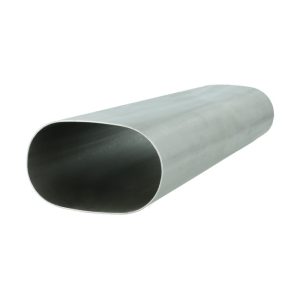
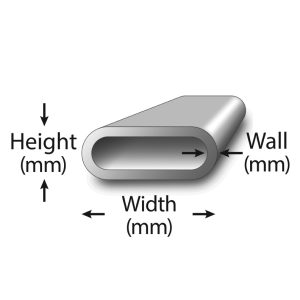
If you are looking to buy High quality assured Titanium Round Tubing or Titanium Thin Wall Tubing at best price in China, send an email to sales@tubesolutions.com.cn, we will send you the Free Quote & recent price of Titanium precision tubes, Heavy Wall Titanium Tubing, Titanium Dom Tubing along with inspection & delivery schedule. Titanium Oval Tube, Titanium Hollow Tube and Titanium Condenser Tubes are available in different sizes, diameter & wall thickness.
Name | Titanium Tube & Pipe |
Standard | ASTM B338/ASME SB338, ASTM B337/ASME SB337, ASTM B861/ASME SB861, ASTM B862/ASME SB862,AMS4911,AMS4928 |
Material Grade | Gr1, Gr2, Gr4, Gr7, Gr9, Gr11, Gr12, etc |
Length | ≤14000mm |
Size(mm) | Diameter 3.00-325.00mm |
Section shape | Round / Square |
Tolerance | a) Outer Diameter: +/- 0.10mm |
b) Thickness: +/- 0.10mm | |
c) Length: +/- 0.1mm | |
Surface | Pickling, annealing, polishing, bright. |
Feature | 1.Low Density and High Strength 2.Excellent Corrosion Resistance 3.Good resistance to effect of heat 4.Excellent Bearing to cryogenic property 5.Nonmagnetic and Non-toxic 6.Good thermal properties 7.Low Modulus of Elasticity |
Test | Squash test, extended test, water pressure test, crystal rot test, heat treatment, NDT |