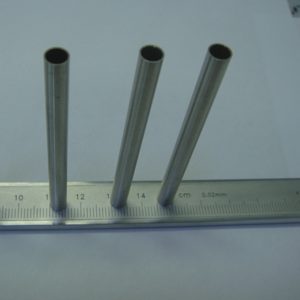
Medical Capillary Tubing


The future of hollow stainless capillary tubes is shaped by several key trends, including the development of high-purity alloys and advanced manufacturing techniques such as laser micro-machining and electrochemical machining, which enable sub-millimeter precision and complex micro-features. Composite integration—combining stainless steel with polymers or specialized coatings—is also gaining traction, reducing friction and enhancing lubricity for medical and fluid handling applications. Smart tubing, integrated with sensors for real-time pressure, temperature, or position feedback, is another emerging trend, particularly in medical and aerospace systems. Additionally, there is a growing focus on eco-friendly manufacturing processes, such as water-based cleaning and reduced chemical consumption, to minimize environmental impact.
In conclusion, stainless capillary tubes are precision components that play a critical role in advancing technology across multiple industries. Their unique combination of hollow structure, welded construction, and strict dimensional tolerances makes them ideal for applications where precision, durability, and compactness are essential. By leveraging high-quality materials, advanced manufacturing processes, and strict quality control, these tubes deliver reliable performance in medical, aerospace, electronics, and chemical applications. As technology continues to advance, hollow welded capillary tubes will evolve to meet the growing demands of miniaturization, smart integration, and sustainability, remaining a vital component in the global precision manufacturing landscape.
- Description
- Inquiry
Description
Stainless capillary tubes are specialized precision components that play an indispensable role in a wide range of industries, from medical instrumentation and minimally invasive surgery to aerospace, electronics, and precision fluid handling. Defined by their hollow structure, welded construction, and ultra-fine diameter, these tubes are engineered to meet strict dimensional tolerances, material standards, and performance requirements, enabling them to function reliably in applications where space is limited, precision is critical, and durability is non-negotiable. Unlike seamless capillary tubes, which are formed from a single piece of metal, hollow welded capillary tubes are manufactured by welding two or more metal strips or sheets into a tubular shape, followed by precision processing to achieve the desired dimensions and surface quality. This unique manufacturing method balances cost-effectiveness, customizability, and performance, making them a preferred choice for both standard and specialized applications. This article provides a comprehensive introduction to hollow welded capillary tubes, covering their material selection, manufacturing processes, key specifications, performance characteristics, typical applications, quality standards, and future trends, offering a holistic understanding of their value and versatility.
The selection of materials for hollow welded capillary tubes is dictated by the specific requirements of the application, including corrosion resistance, temperature tolerance, biocompatibility (for medical use), and mechanical strength. The most commonly used materials are high-grade stainless steels, which offer an optimal combination of durability, corrosion resistance, and processability. Among these, AISI 304 and SUS304 stainless steel are widely used for general-purpose applications, providing good corrosion resistance against mild chemicals and environmental factors. For more demanding environments—such as medical devices, chemical processing, or marine applications—AISI 316, 316L, and 316LVM stainless steels are preferred. 316L, a low-carbon molybdenum-bearing alloy, exhibits exceptional resistance to corrosion from body fluids, disinfectants, and harsh chemicals, while its low carbon content prevents intergranular corrosion during high-temperature sterilization. 316LVM, produced via vacuum melting, further reduces impurities and inclusions, making it ideal for high-end medical devices that require strict biocompatibility and fatigue resistance.
Beyond stainless steels, hollow welded capillary tubes can also be manufactured from other materials to suit specific needs. For high-temperature applications—such as aerospace engine components or industrial furnaces—alloys like 321, 310S, and Inconel 625 are used, offering excellent thermal stability and resistance to oxidation at elevated temperatures. For super corrosion-resistant applications in harsh chemical environments, 904L stainless steel and Alloy 625 are chosen, as they can withstand exposure to strong acids, alkalis, and saltwater without degradation. In some electronic and precision instrumentation applications, copper and copper alloys are used for their excellent thermal and electrical conductivity, while titanium alloys are employed in medical implants and aerospace components due to their high strength-to-weight ratio and biocompatibility.
The manufacturing process of hollow welded capillary tubes is a complex, multi-step operation that requires precision engineering and strict quality control to ensure consistent performance and dimensional accuracy. The process begins with the selection of high-quality raw materials, typically metal strips or sheets, which are carefully inspected for impurities, thickness uniformity, and surface quality. The strips are then formed into a tubular shape using specialized rolling equipment, ensuring that the edges meet perfectly to form a tight seam. The seam is then welded using advanced techniques such as argon arc welding (TIG welding), laser welding, or plasma welding, which produce a strong, leak-proof joint with minimal heat-affected zone—critical for maintaining the tube’s mechanical strength and dimensional stability.
After welding, the tubes undergo a series of post-processing steps to refine their dimensions, surface quality, and mechanical properties. Cold drawing is a key step, which reduces the outer diameter and wall thickness to the desired specifications while improving the tube’s surface finish and mechanical strength. This process also ensures uniform wall thickness and concentricity, which are essential for applications involving fluid flow or precision instrument guiding. The tubes are then cut to the required length using precision cutting equipment, followed by deburring and chamfering of both the inner and outer edges to remove sharp edges that could cause damage to other components or tissue (in medical applications). Surface treatment is another important step, with options including bright annealing (BA) for a clean, oxide-free surface, electropolishing (EP) for a ultra-smooth finish (Ra ≤ 0.8 μm) ideal for medical devices, mechanical polishing (MP) for a bright, reflective surface, and pickling (AP) to remove oxide layers and contaminants.
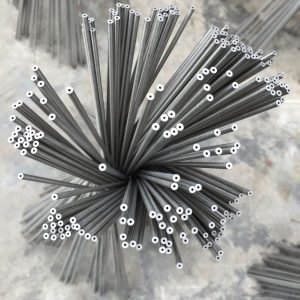
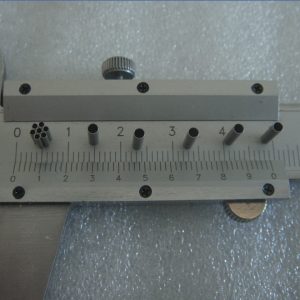
Key specifications of hollow welded capillary tubes are tailored to the application, with strict tolerances to ensure performance and compatibility. The outer diameter (OD) typically ranges from 0.3 mm to 21.0 mm, with standard sizes between 0.5 mm and 12.0 mm—ideal for precision applications where space is limited. The wall thickness (WT) is equally critical, with minimum thicknesses as low as 0.08 mm and standard ranges between 0.10 mm and 1.0 mm; precision thin-wall options (0.08–0.5 mm) are available for applications requiring lightweight construction or maximum internal lumen space. The inner diameter (ID) is calculated as OD minus twice the wall thickness, and it must be consistent throughout the tube to ensure uniform fluid flow or instrument movement.
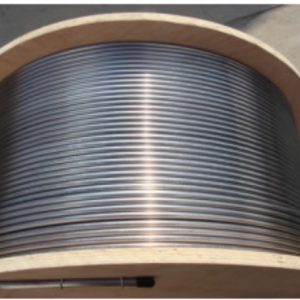
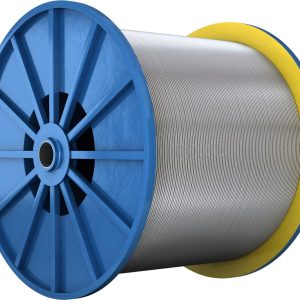
Length specifications vary widely, with standard straight lengths ranging from 200 mm to 6000 mm, while coiled tubes can be produced in continuous lengths of up to 5000 meters for applications such as fluid transfer lines. Custom cut lengths are also available, with minimum lengths as low as 1.5 mm (provided the ends can be deburred). Tolerances are a hallmark of hollow welded capillary tubes, with high-precision options offering OD tolerances of ±0.01 mm to ±0.03 mm, wall thickness tolerances of ±0.01 mm to ±0.05 mm, and length tolerances of ±0.5 mm to ±2 mm for cut-to-length tubes. Concentricity—critical for ensuring uniform wall thickness and consistent performance—is typically ≤ 80% for standard products, with higher precision options available for specialized applications.
The mechanical properties of hollow welded capillary tubes vary based on the material and post-processing steps. For 316L stainless steel, the typical tensile strength is ≥ 515 MPa (75 KSI), yield strength is ≥ 205 MPa (30 KSI), and elongation is ≥ 35%. The hardness can be adjusted based on the application, with options including soft (annealed) for bendability and formability, or 1/4H, 1/2H, and full hard for increased rigidity. These properties ensure that the tubes can withstand the mechanical stresses of insertion, manipulation, and repeated use (in reusable applications) without bending, kinking, or fracturing.
Hollow welded capillary tubes find applications across a diverse range of industries, with their precision and versatility making them indispensable in many critical systems. In the medical field, they are used in laparoscopic instruments, needle cannulas, endoscopic tubing, irrigation and suction devices, and sensor probes. Their small diameter, smooth surface, and biocompatibility make them ideal for minimally invasive surgery, where they enable surgeons to access hard-to-reach areas through small incisions while minimizing tissue damage. In precision instrumentation, they are used as sensor tubes, chromatography columns, and fluid delivery lines, where their uniform internal lumen ensures accurate fluid flow and measurement.
In the electronics industry, hollow welded capillary tubes are used as micro-capillaries for thermal management, electrical connectors, and fiber optic guiding systems. Their small size and thermal conductivity make them ideal for cooling electronic components in compact devices such as smartphones, laptops, and medical monitors. In aerospace and automotive applications, they are used as small-diameter hydraulic lines, fuel lines, and thermal probes, where their durability, corrosion resistance, and precision ensure reliable performance in extreme environments. In the chemical and pharmaceutical industries, they are used for fine flow control, chemical sampling, and drug delivery systems, where their resistance to harsh chemicals and sterility make them suitable for critical processes.
Quality control and compliance are critical for hollow welded capillary tubes, particularly in medical and aerospace applications. Manufacturing facilities typically operate in Class 100,000 cleanrooms to prevent particulate contamination, and production follows international standards such as ASTM A269, A249, A632, DIN 2463, EN 10217-7, GB 3090, and JIS G3448. Strict quality control measures include dimensional inspection using optical measuring equipment, pressure and leak testing for fluid delivery components, surface roughness and cleanliness verification, biocompatibility testing (for medical use), and sterilization validation. All products are traceable, with raw material batches and manufacturing processes documented to ensure compliance with regulatory requirements such as FDA and CE marking.
Despite their widespread use, hollow welded capillary tubes face several challenges, including the need for tighter tolerances in miniaturized applications (such as micro-laparoscopy and micro-electronics), the high cost of manufacturing complex geometries, and competition from single-use plastic alternatives in some industries. However, ongoing advancements in manufacturing technology are addressing these challenges, driving the development of more precise, cost-effective, and versatile products.
The future of hollow welded capillary tubes is shaped by several key trends, including the development of high-purity alloys and advanced manufacturing techniques such as laser micro-machining and electrochemical machining, which enable sub-millimeter precision and complex micro-features. Composite integration—combining stainless steel with polymers or specialized coatings—is also gaining traction, reducing friction and enhancing lubricity for medical and fluid handling applications. Smart tubing, integrated with sensors for real-time pressure, temperature, or position feedback, is another emerging trend, particularly in medical and aerospace systems. Additionally, there is a growing focus on eco-friendly manufacturing processes, such as water-based cleaning and reduced chemical consumption, to minimize environmental impact.
In conclusion, hollow welded capillary tubes are precision components that play a critical role in advancing technology across multiple industries. Their unique combination of hollow structure, welded construction, and strict dimensional tolerances makes them ideal for applications where precision, durability, and compactness are essential. By leveraging high-quality materials, advanced manufacturing processes, and strict quality control, these tubes deliver reliable performance in medical, aerospace, electronics, and chemical applications. As technology continues to advance, hollow welded capillary tubes will evolve to meet the growing demands of miniaturization, smart integration, and sustainability, remaining a vital component in the global precision manufacturing landscape.