Inserting bottle dispensing needles


The future of inserting bottle dispensing needles is shaped by several key trends, including the development of smart needles integrated with sensors to monitor fluid flow, pressure, or temperature in real-time, providing feedback for automated dispensing systems. Composite materials—combining stainless steel with polymers or specialized coatings—are also gaining traction, reducing friction, enhancing lubricity, and improving biocompatibility. There is a growing focus on sustainability, with manufacturers developing recyclable or biodegradable plastic needles to reduce environmental impact, as well as reusable stainless steel models that can be sterilized and reused multiple times to minimize waste. Additionally, advancements in miniaturization are enabling the development of smaller, more precise needles for micro-dispensing applications, such as in personalized medicine and micro-electronics.
In conclusion, inserting bottle dispensing needles are essential precision components that play a critical role in fluid handling across medical, pharmaceutical, industrial, and consumer industries. Their unique insertable design, precise tip geometry, and compatibility with bottle containers make them indispensable for applications requiring accurate, clean, and controlled fluid dispensing. By leveraging high-quality materials, advanced manufacturing processes, and strict quality control, these needles deliver consistent performance, ensuring the integrity of the fluids they dispense and the safety of end-users. As technology continues to advance, inserting bottle dispensing needles will evolve to meet the growing demands of miniaturization, automation, and sustainability, remaining a vital component in the global precision fluid handling landscape.
- Description
- Inquiry
Description
Inserting bottle dispensing needles are specialized precision components designed for the accurate, controlled dispensing of fluids from bottle containers, serving as a critical link between storage vessels and end-use applications across multiple industries. Defined by their insertable design, fine-tipped structure, and compatibility with various bottle types, these needles are engineered to deliver fluids—ranging from medical reagents and pharmaceuticals to industrial chemicals and cosmetic formulations—with minimal waste, maximum cleanliness, and consistent performance. Unlike standard dispensing needles, inserting bottle dispensing needles are specifically optimized for insertion into bottle openings, featuring sharp, smooth tips that penetrate seals or stoppers without damaging the container or contaminating the contents. This article provides a comprehensive overview of inserting bottle dispensing needles, covering their core design features, material selection, manufacturing processes, key specifications, performance characteristics, industry applications, quality standards, and future trends, offering a detailed understanding of their role in precision fluid handling.
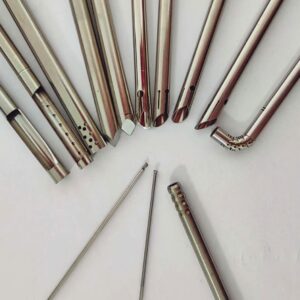
The design of inserting bottle dispensing needles is tailored to address the unique challenges of bottle-based fluid dispensing, focusing on three core objectives: easy insertion, leak-proof performance, and precise fluid control. The most distinctive feature is the needle tip, which is typically ground into a sharp, beveled shape—often a three-facet or five-facet lancet design—to minimize puncture resistance, allowing smooth penetration of bottle stoppers, rubber seals, or aluminum foils without tearing or generating debris that could contaminate the fluid inside. The tip may also feature side holes in some models to prevent clogging and ensure uniform fluid flow, particularly for viscous liquids such as adhesives or thick pharmaceuticals. The needle body is a hollow, cylindrical structure, often crafted from precision tubing, with a smooth internal lumen to reduce friction and facilitate consistent fluid flow, while the base is designed to connect securely to dispensing systems, syringes, or tube assemblies, ensuring a leak-proof seal that prevents fluid seepage during use.
Another key design consideration is compatibility with different bottle types and sizes. Inserting bottle dispensing needles are available in various lengths and diameters to accommodate everything from small vials (common in laboratories and medical settings) to large industrial bottles, with adjustable or interchangeable tips to fit different bottle neck sizes and seal thicknesses. Some models feature a stepped or tapered design, allowing them to adapt to varying bottle opening diameters, while others include a collar or flange at the base to limit insertion depth, preventing over-penetration that could damage the bottle or contaminate the fluid. For applications requiring sterility—such as medical and pharmaceutical use—the needles are designed to be compatible with standard sterilization methods, with smooth, non-porous surfaces that resist biofilm formation and facilitate thorough cleaning.
Material selection for inserting bottle dispensing needles is governed by the application’s requirements, including biocompatibility (for medical/pharmaceutical use), corrosion resistance (for harsh chemicals), and mechanical strength (for repeated insertion and use). The most commonly used materials are medical-grade stainless steels, particularly AISI 316L and 316LVM, which offer an optimal combination of biocompatibility, corrosion resistance, and durability. 316L stainless steel is widely favored for its ability to withstand exposure to body fluids, disinfectants, and harsh chemicals without degradation, while its low carbon content prevents intergranular corrosion during high-temperature sterilization. 316LVM, produced via vacuum melting, further reduces impurities, making it ideal for high-end medical applications that require strict biocompatibility and fatigue resistance. For general-purpose applications, AISI 304 stainless steel is used, providing good corrosion resistance at a more cost-effective price point.
Beyond stainless steels, other materials are used for specialized applications. Plastic needles—typically made from medical-grade polypropylene (PP) or polyethylene (PE)—are lightweight, cost-effective, and suitable for single-use applications, particularly in cosmetics, food and beverage, and low-risk industrial settings. Brass needles are employed in applications requiring electrical conductivity, such as some industrial dispensing systems, while titanium alloys are used for high-strength, lightweight requirements in aerospace or advanced medical devices. Silicone seals are often integrated into the needle base to enhance leak-proof performance, providing flexibility and resistance to temperature and chemical exposure.
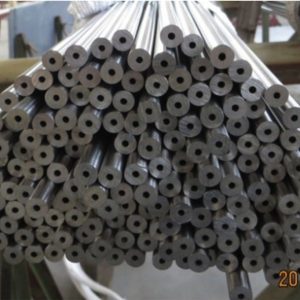
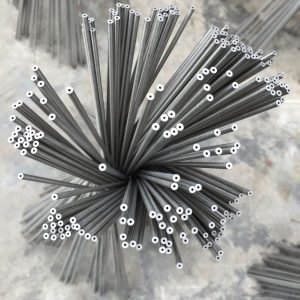
The manufacturing process of inserting bottle dispensing needles is a precision-driven operation that requires strict quality control to ensure consistency, safety, and performance. The process begins with the selection of high-quality raw materials, typically precision stainless steel tubing (often hollow welded capillary tubes, which provide uniform wall thickness and a smooth internal lumen) or medical-grade plastics. For metal needles, the tubing is first cut to the required length using precision cutting equipment, followed by tip grinding to create the sharp, beveled shape. This grinding process is critical, as it determines the needle’s puncture performance and smoothness—any imperfection in the tip can cause seal damage or fluid contamination. The needle is then deburred to remove sharp edges from the cut ends, reducing the risk of injury and ensuring a smooth surface that resists fluid buildup.
For medical-grade needles, post-processing steps include electropolishing, which creates an ultra-smooth surface (Ra ≤ 0.8 μm) that minimizes friction and prevents fluid adhesion, and passivation, which strengthens the stainless steel’s protective oxide layer to enhance corrosion resistance. The needles are then assembled with plastic hubs or bases, using advanced welding techniques such as laser welding to ensure a secure, leak-proof bond without generating debris or contaminants—a critical requirement for medical and pharmaceutical applications. The final step involves sterilization, typically via ethylene oxide (EO) or gamma radiation, to ensure the needles are free from bacteria and ready for use in sterile environments. Manufacturing facilities often operate in Class 100,000 cleanrooms to prevent particulate contamination during production, adhering to strict hygiene standards.
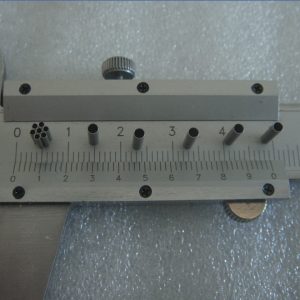
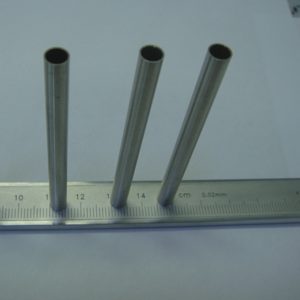
Key specifications of inserting bottle dispensing needles are tailored to the application, with strict tolerances to ensure compatibility and performance. The outer diameter (OD) of the needle tip typically ranges from 0.2 mm to 3.0 mm, with smaller diameters (0.2–0.5 mm) used for micro-dispensing applications such as laboratory reagent delivery, and larger diameters (1.0–3.0 mm) for industrial or pharmaceutical use. The inner diameter (ID) is carefully controlled to ensure consistent fluid flow, with a typical range of 0.1 mm to 2.5 mm, depending on the fluid viscosity and desired flow rate. Needle length varies from 5 mm to 100 mm, with standard lengths between 10 mm and 50 mm to accommodate different bottle depths.
Tolerances are a critical aspect of these needles, with high-precision models offering OD tolerances of ±0.01 mm to ±0.03 mm and ID tolerances of ±0.005 mm to ±0.02 mm, ensuring consistent performance across batches. The bevel angle of the tip is typically between 15° and 45°, with 30° being the standard for most applications, as it balances sharpness and strength. Mechanical properties vary by material: for 316L stainless steel needles, the tensile strength is ≥ 515 MPa, yield strength ≥ 205 MPa, and elongation ≥ 35%, ensuring the needle can withstand repeated insertion without bending or fracturing. For plastic needles, hardness is adjusted to balance flexibility and rigidity, preventing breakage during insertion.
Inserting bottle dispensing needles find applications across a diverse range of industries, each with unique requirements. In the medical and pharmaceutical industry, they are used for dispensing medications, vaccines, and reagents, where sterility, precision, and biocompatibility are critical. They are commonly integrated into disposable syringes, infusion sets, and automated dispensing systems, enabling accurate delivery of medications to patients or precise measurement of reagents in laboratories. In the laboratory and scientific research field, these needles are used for pipetting small volumes of liquids, sample preparation, and chemical dispensing, where their fine tips and precise flow control minimize waste and ensure accurate results.
In the chemical and industrial sectors, inserting bottle dispensing needles are used for dispensing solvents, adhesives, lubricants, and industrial chemicals, where their corrosion resistance and leak-proof design prevent spills and contamination. They are particularly valuable in applications requiring controlled flow of harsh chemicals, as stainless steel models can withstand exposure to strong acids, alkalis, and solvents without degradation. In the cosmetics and personal care industry, these needles are used for dispensing serums, essential oils, and makeup products, where their fine tips enable precise application and minimize product waste. In the food and beverage industry, they are used for injecting flavorings, fillings, or sauces into products, ensuring uniform distribution and maintaining product quality.
Quality control and compliance are paramount for inserting bottle dispensing needles, especially in medical and pharmaceutical applications. Manufacturing processes adhere to international standards such as ASTM F1054 (for medical needles), ISO 13485 (medical device quality management), and FDA regulations, ensuring safety and performance. Strict quality control measures include dimensional inspection using optical measuring equipment, leak testing to ensure seal integrity, surface roughness verification, and biocompatibility testing (for medical use) in accordance with ISO 10993. For sterile needles, sterilization validation is conducted to ensure the effectiveness of the sterilization process, and all products are traceable, with raw material batches and manufacturing processes documented to facilitate recall if necessary. Additionally, needle tip sharpness is tested to ensure puncture resistance meets industry standards—for example, needle tips with an OD of 1.2mm or 1.6mm typically have a puncture force of ≤2.5N, while those with a 2.5mm OD have a puncture force of ≤5N.
Despite their widespread use, inserting bottle dispensing needles face several challenges, including the need for tighter tolerances in miniaturized applications (such as micro-dispensing in laboratories and precision medical devices), the high cost of manufacturing high-precision metal needles, and competition from single-use plastic alternatives in cost-sensitive industries. Additionally, the need for enhanced compatibility with automated dispensing systems is driving demand for needles with standardized connections and improved integration capabilities. However, ongoing advancements in manufacturing technology—such as laser micro-machining and automated assembly—are addressing these challenges, enabling the production of more precise, cost-effective, and versatile needles.