Laparoscopic Stainless Tube


Laparoscopic stainless steel tubes are far more than structural components—they are essential enablers of modern minimally invasive surgery. By merging medical-grade material science, precision engineering, and strict quality governance, these tubes balance safety, performance, and cost-efficiency for healthcare providers worldwide. As MIS continues to advance toward smaller incisions, greater precision, and smarter devices, laparoscopic stainless steel tubes will remain at the forefront, adapting to new surgical techniques while upholding the highest standards of patient safety and clinical reliability. Their ongoing innovation will continue to shape the future of surgical technology, making complex procedures less invasive and recovery faster for millions of patients globally.
- Description
- Inquiry
Description
Laparoscopic Stainless Steel Tubes: A Comprehensive Introduction
In modern minimally invasive surgery (MIS), laparoscopic stainless steel tubes stand as foundational components that bridge engineering precision and clinical safety. These specialized tubular components are integral to trocars, endoscopic sheaths, irrigation–suction devices, and instrument shafts, enabling surgeons to perform complex abdominal, pelvic, and thoracic procedures through small incisions. As a critical category of medical-grade precision tubing, they combine material reliability, dimensional accuracy, and biocompatibility to support safer, faster, and more effective surgical interventions. This article explores their material selection, structural characteristics, manufacturing standards, clinical applications, performance advantages, and future development trends.
Material Selection and Core Properties
The dominant materials for laparoscopic stainless steel tubes are medical-grade 316L and 316LVM stainless steel, with 304 used in non-implant structural parts. 316L, a low-carbon molybdenum-bearing alloy, delivers exceptional corrosion resistance, especially against body fluids, disinfectants, and high-temperature sterilants. Its low carbon content minimizes carbide precipitation, preventing intergranular corrosion and maintaining structural stability after repeated autoclaving at 132–134°C. 316LVM, produced via vacuum melting, further reduces inclusions and impurities, meeting stricter standards for high-end reusable endoscopic devices.
Key material properties include:
- Biocompatibility: Non-toxic, non-allergenic, and compliant with ISO 10993 biological evaluation to avoid tissue irritation or inflammatory responses.
- Mechanical strength: Balanced rigidity and toughness to resist bending, kinking, or fracture during insertion and manipulation.
- Sterilization compatibility: Stable under steam autoclaving, ethylene oxide (EO), and low-temperature plasma sterilization without deformation or material degradation.
- Cleanability: Smooth, non-porous surfaces resist biofilm formation, supporting effective cleaning and reducing infection risks.
Structural Design and Precision Specifications
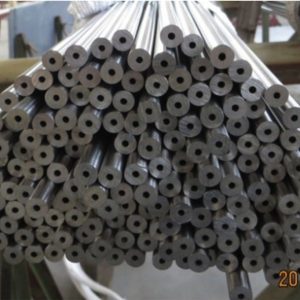
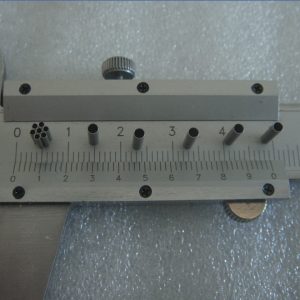
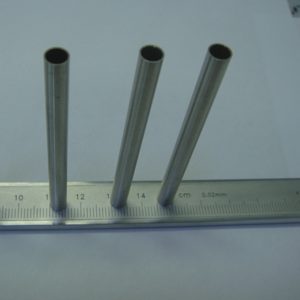
Laparoscopic stainless steel tubes are manufactured to strict dimensional and surface standards tailored to surgical needs. Common outer diameters range from 3mm to 12mm, with 5mm and 10mm being the most widely used for routine procedures; smaller diameters support pediatric and micro-laparoscopic applications. Wall thicknesses are precisely controlled between 0.15mm and 0.5mm to optimize torque transmission, column strength, and internal channel space for tools, optics, or fluid delivery.
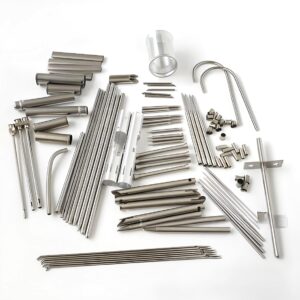
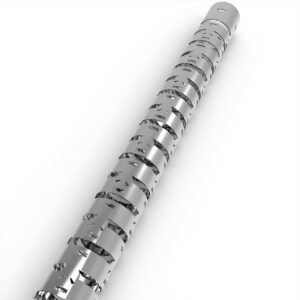
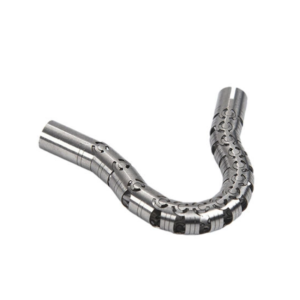
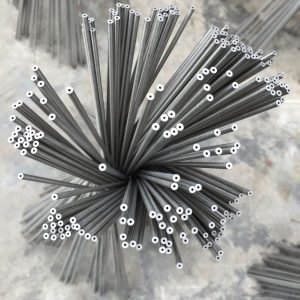
Most high-grade tubes are seamless cold-drawn to ensure uniform wall thickness, concentricity, and a defect-free internal lumen. Surface finish is critical: Ra ≤ 0.8μm for internal surfaces to reduce friction and tissue damage, while external surfaces may undergo electropolishing or mechanical polishing for enhanced cleanliness and corrosion resistance. Tubes may feature laser-cut windows, threaded ends, or stepped profiles to integrate with valve assemblies, optical systems, or handle mechanisms, with machining tolerances often held within ±0.01mm.
Manufacturing and Quality Compliance
Production occurs in Class 100,000 cleanrooms to prevent particulate contamination, following ISO 13485 medical device quality systems. Key processes include tube forming, precision cutting, deburring, electropolishing, passivation, cleaning, and packaging. Passivation removes free iron particles, strengthening the chromium oxide protective layer and boosting corrosion resistance.
Strict quality control includes:
- Dimensional inspection using optical measuring equipment
- Pressure and leak testing for fluid delivery components
- Surface roughness and cleanliness verification
- Biocompatibility and sterilization validation
- Traceability of raw material batches
Products typically carry CE marking and meet FDA requirements for distribution in global medical markets.
Clinical Applications
Laparoscopic stainless steel tubes serve across nearly all minimally invasive specialties:
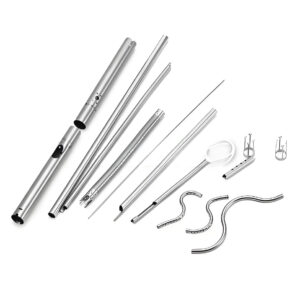
- Trocars and cannulae: As the outer sheath to create and maintain surgical access ports, enabling instrument insertion and pneumoperitoneum.
- Endoscopic shafts: Housing optical lenses, light guides, and transmission components in rigid laparoscopes for clear visualization.
- Irrigation–suction tubes: Delivering sterile fluids and removing blood, debris, or smoke to maintain a clear surgical field.
- Instrument sheaths: Protecting and guiding graspers, scissors, staplers, and electrocautery devices.
- Specialized devices: Supporting laser probes, ultrasound handpieces, and suturing systems in advanced MIS.
Their versatility makes them indispensable in general surgery, gynecology, urology, bariatrics, and thoracic procedures.
Performance Advantages Over Alternatives
Compared with plastic, aluminum, or nitinol tubes, stainless steel offers unique benefits:
- Durability and reusability: Withstand hundreds of sterilization cycles, lowering long-term costs compared to single-use plastics.
- Torque and stability: Superior column strength prevents buckling, improving surgical control and accuracy.
- Thermal stability: No softening or distortion under high-temperature sterilization or surgical thermal loads.
- Recyclability and sustainability: Reduces medical waste and supports green healthcare initiatives.
- Customizability: Easily machined, welded, and surface-treated to meet device-specific design requirements.
Challenges and Future Trends
Despite widespread use, challenges remain: miniaturization for single-incision or micro-surgery demands even tighter tolerances; complex geometries increase production costs; and demand for disposable alternatives creates market pressure.
The industry is evolving toward:
- High-purity alloys: Advanced 316LVM and modified stainless steels for improved biocompatibility and fatigue resistance.
- Micro-machining: Laser processing and electrochemical machining for sub-millimeter precision and complex micro-features.
- Composite integration: Combining stainless steel with polymers or coatings to reduce friction and enhance lubricity.
- Smart tubing: Integrated sensors for real-time pressure, temperature, or position feedback in next-generation surgical systems.
- Eco-friendly manufacturing: Water-based cleaning and reduced chemical consumption to lower environmental impact.
Conclusion
Laparoscopic stainless steel tubes are far more than structural components—they are essential enablers of modern minimally invasive surgery. By merging medical-grade material science, precision engineering, and strict quality governance, these tubes balance safety, performance, and cost-efficiency for healthcare providers worldwide. As MIS continues to advance toward smaller incisions, greater precision, and smarter devices, laparoscopic stainless steel tubes will remain at the forefront, adapting to new surgical techniques while upholding the highest standards of patient safety and clinical reliability. Their ongoing innovation will continue to shape the future of surgical technology, making complex procedures less invasive and recovery faster for millions of patients globally.